Unified Commerce Platforms in Regional C-Stores: Enterprise Software Standardization and Fleet Workflow Integration
Regional convenience operator Rutter's is deploying a unified NCR Voyix enterprise platform across 94 locations in four US states. This analysis reviews the software rollout, fleet card payment integration, and operational testing methodologies for evaluating unified platform deployments.
Editorial illustration
Unified Commerce Platforms in Regional C-Stores: Enterprise Software Standardization and Fleet Workflow Integration
In modern downstream fuel retail and convenience store operations, legacy IT architectures frequently rely on disparate systems for front-counter point-of-sale (POS), kitchen execution, and forecourt payment routing. Transitioning to a single enterprise software platform represents a structural shift in how regional operators manage data synchronization, payment processing, and hardware maintainability across multi-state footprints.
Sourced Network Infrastructure Deployment
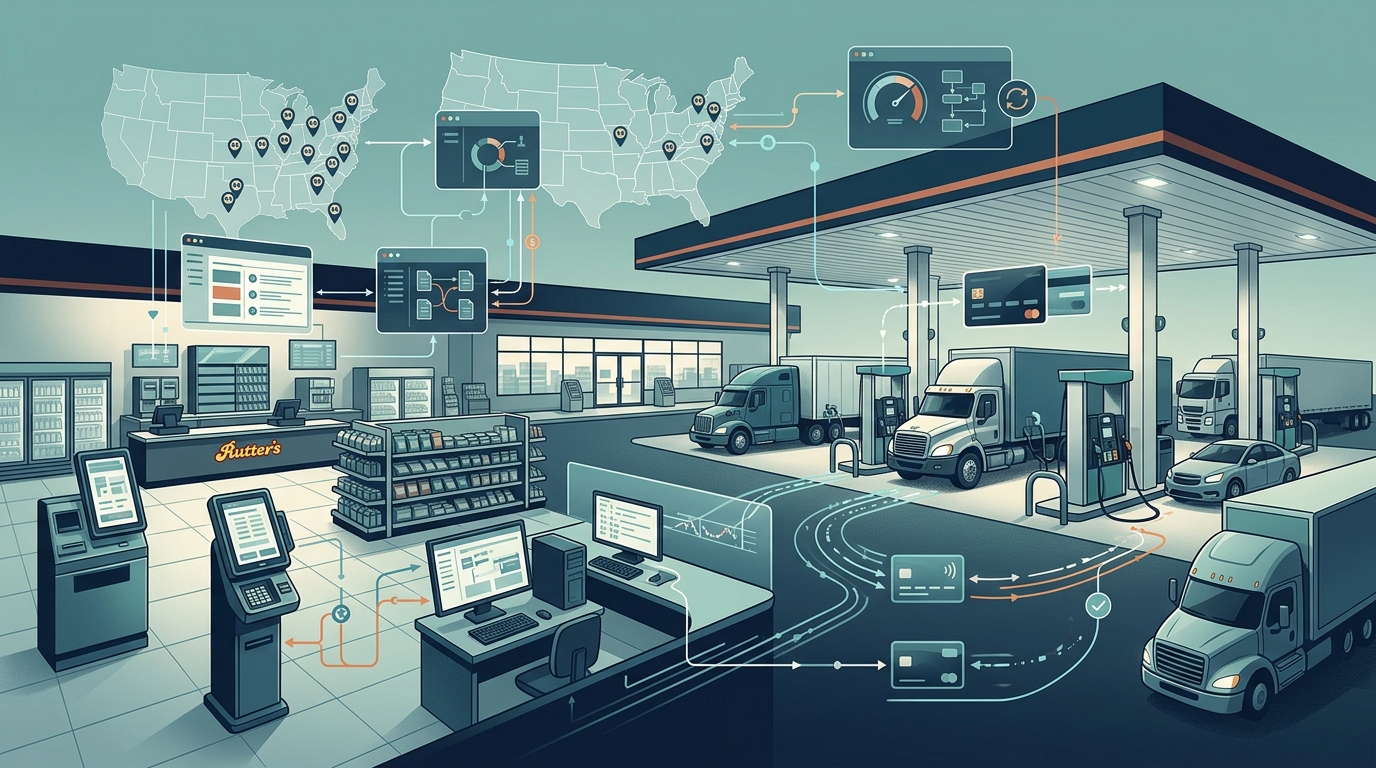
As reported by MobilityPlaza, York, Pennsylvania-based convenience operator Rutter's signed a multi-year enterprise agreement with technology provider NCR Voyix to update POS systems across its 94 stores located in Pennsylvania, Maryland, Virginia, and West Virginia.
The technology deployment incorporates Voyix POS for CFR, Voyix Kitchen, and Voyix Connect, accompanied by vendor managed services and field support. For forecourt and payment terminal operations, the platform accepts commercial fleet card payment processing from Corpay, WEX, and Voyager.
In an executive statement, Scott Hartman, President and CEO of Rutter's, stated: "As consumer expectations continue to evolve, we are investing in technology to create a more seamless and personalized experience across customer touchpoints".
Founded in 1747, family-managed Rutter's self-identifies as the oldest vertically integrated food company in the United States. Operational recognitions reported for the chain include winning the CSP Mystery Shop award for Best Customer Experience five times—including in 2026—and being named Best Foodvenience in the World by Global Convenience in 2025.
Analytical Perspective: Evaluating Enterprise Platform Integration
*Note: The following analysis represents an independent evaluation of enterprise IT architecture and is distinct from sourced factual reporting.*
Platform Architecture vs. Best-of-Breed Middleware
Selecting a single primary platform vendor simplifies vendor governance, patch management, and support escalations across store networks. However, operators must balance unified vendor reliance against modular flexibility.
When deploying integrated kitchen management (such as Voyix Kitchen) alongside forecourt POS platforms, the key operational trade-off centers on real-time order synchronicity across touchpoints (kiosks, counter POS, mobile apps) versus the potential lock-in to proprietary hardware peripherals and software release cycles.
Unmeasured Benefit Hypotheses and Suggested Operator Testing
Supplier and operator statements often emphasize enhanced customer experiences or streamlined workflows during enterprise rollouts. In accordance with rigorous operational governance, these potential benefits should be framed as hypotheses requiring empirical verification rather than baseline guarantees.
- Transaction Velocity and Order Accuracy Hypothesis: Deploying a single enterprise software engine across store POS and kitchen display modules reduces peak-hour kitchen order processing bottlenecks and customer wait times.
- *Proposed Test Plan*: Establish a baseline measurement of order throughput time, order defect rates, and checkout transaction latency across 10 control stores using legacy middleware. Compare these against 10 trial locations implementing the unified platform over a 120-day operational review window during morning and evening rush dayparts.
- Fleet Card Authorization Continuity Hypothesis: Consolidating forecourt payment routing under a modern enterprise POS module maintains uninterrupted acceptance for specialized fleet cards without increasing pump authorization drop-outs.
- *Proposed Test Plan*: Audit transaction approval response times, prompt exception rates (such as driver ID or unit number rejection), and offline fallback occurrences for Corpay, WEX, and Voyager card swipes across 50,000 forecourt transactions post-cutover.
Strategic Considerations for Multi-State Forecourts
For regional chains operating across multiple state jurisdictions (such as Pennsylvania, Maryland, Virginia, and West Virginia), centralized software platforms must dynamically support regional tax rules, local product restrictions, and varying fleet contract parameters. Ensuring field support SLAs and managed services cover dispersed store footprints is a critical contingency when transitioning to centralized IT management.