Refining Capacity Strategy and Freight Hydrogen Logistics: Downstream Operational Analysis
Downstream energy operators are facing shifting supply dynamics as European refining capacity contracts, while public-private partnerships in South America demonstrate how captive logistics hubs can de-risk heavy-duty hydrogen refueling infrastructure.
Editorial illustration
Refining Capacity Strategy and Freight Hydrogen Logistics: Downstream Operational Analysis
Policy Recognition and Refining Capacity Shifts in Europe
Macro energy policies are increasingly confronting the balance between traditional refining infrastructure and long-term decarbonization targets. According to FuelsEurope, G7 leaders recently issued a statement formally recognizing refining as a vital component for energy security, economic resilience, and market stability.
Industry data highlighted by the trade association shows that Europe has faced "35 refinery closures since 2009" alongside a 20% reduction in processing capacity during a period of rising geopolitical uncertainty. Addressing these supply chain dynamics, Liana Gouta, Director General of FuelsEurope, stated that "refining is a strategic industry" and essential to energy security. To safeguard long-term fuel availability and transition readiness, the association is calling on the European Commission to establish a permanent Strategic Dialogue with the refining and fuel manufacturing sector.
Operational Analysis
While high-level political statements underscore the essential role of existing refining assets, forecourt operators must navigate immediate regional supply vulnerabilities. The loss of regional refining capacity increases reliance on imported finished products, potentially amplifying wholesale price volatility and supply chain lead times.
- Hypothesis for Fuel Retailers: Establishing multi-supplier rack contracts and expanding on-site distillate storage capacity will lower supply disruption risks during geopolitical crises.
- Proposed Operational Test: Compare fuel delivery fulfillment rates and landed margin variances across sites utilizing single-supplier contracts versus dual-source racked procurement protocols over a six-month evaluation period.
Private-Public Partnerships Driving Heavy-Duty Hydrogen Infrastructure
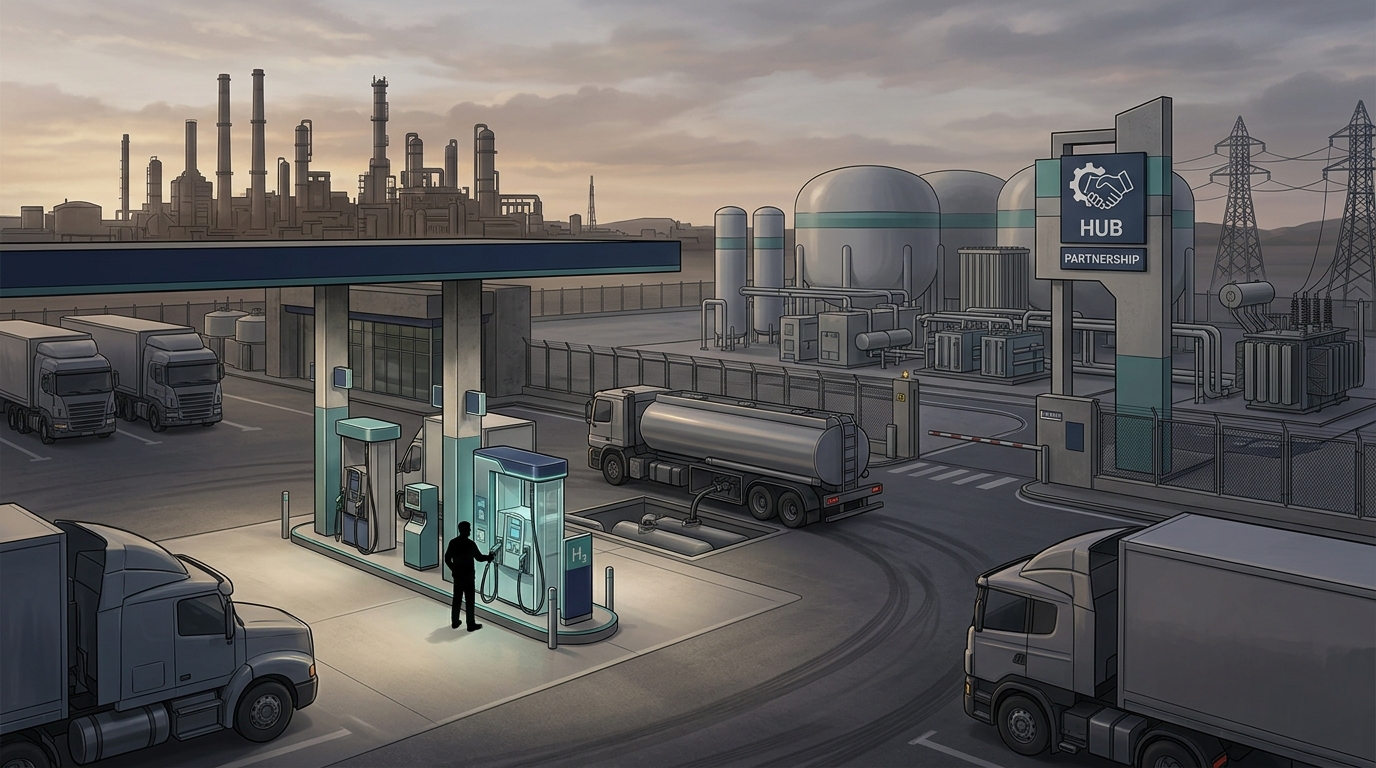
In South America, zero-emission freight transport infrastructure is expanding through co-located logistics partnerships. MobilityPlaza reports that Walmart Chile and Copec have launched Chile's first hydrogen refueling station tailored specifically for heavy-duty trucks.
Located at Walmart Chile’s distribution center in Quilicura, the site powers a green hydrogen truck operated by Marval Clean Logistics for retail distribution. The installation was developed under the Hidrohaul technology program, supported by Chilean development agency Corfo, alongside partners including IEE and Mining3 Chile.
Key technical and environmental parameters of the deployment include:
- Equipment engineering capable of servicing heavy trucks with a "driving range of more than 600 km."
- Projected environmental benefits estimated to "prevent around 380 tonnes of CO₂ emissions annually" which partners equate to taking approximately 83 gasoline vehicles off the road for one year.
- Future roadmap goals targeting the deployment of up to 10 hydrogen trucks at Walmart Chile’s El Peñón distribution facility by 2028.
Operational Analysis
Integrating heavy-duty hydrogen dispensing directly into high-throughput distribution hubs bypasses the initial utilization risks typical of public highway stations. By embedding dispensing assets within captive fleet logistics centers handling hundreds of daily truck movements, project developers secure predictable demand baselines.
- Hypothesis for Commercial Fleet Operators: Co-locating alternative fuel dispensing at private logistics hubs yields lower operational costs per kilogram dispensed than uncommitted public corridor sites.
- Proposed Operational Test: Measure asset utilization rates, maintenance costs, and total cost of ownership (TCO) per kilometer for fleet vehicles serviced at dedicated hub stations versus public corridor retail facilities over 12 months.
Strategic Framework for Forecourt Operators
- Supply Resilience: Track regional refining capacity and evaluate terminal access contracts to mitigate potential finished-product import bottlenecks.
- Fleet Partnership Models: Align clean fuel investments (such as hydrogen or ultra-fast EV charging) with guaranteed daily commercial fleet cycles before committing capital.
- Phased Scaling: Implement pilot facilities at high-density logistics nodes prior to scaling infrastructure across broader forecourt networks.