Forecourt Prepared Food Strategies: Italian Pasta Menu Expansion and Omnichannel Ordering Tech Integration
Forecourt operators are expanding dinner options with customized Italian pasta menus while delivery providers launch unified ordering tools that integrate directly with existing POS hardware.
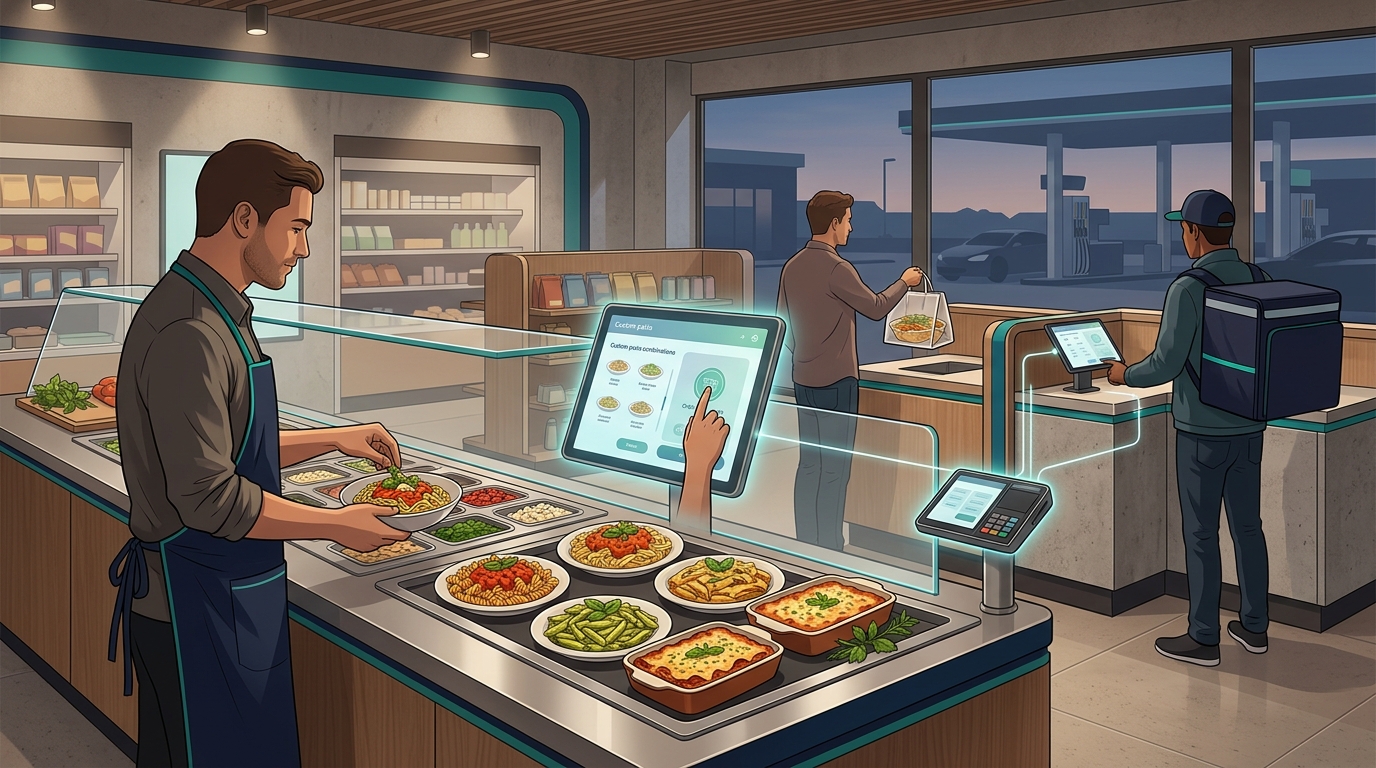
Editorial illustration
Prepared Food Portfolio Expansion in Convenience Forecourts
Pennsylvania-based convenience store operator Rutter’s has introduced an expanded pasta menu across its participating retail locations, as reported by NACS. According to the company, the core menu utilizes "pastas imported directly from Italy" to establish brand credibility and product differentiation in the quick-service food space.
The menu expansion includes complex prepared entrees such as surf and turf fettuccine alfredo, Italian trio spaghetti marinara, loaded fried chicken and mozzarella sticks spaghetti marinara, Italian sausage and peppers spaghetti, Buffalo fried chicken fettuccine alfredo, and fried chicken bacon ranch fettuccine alfredo. Additionally, Rutter’s added a chicken parmesan meal, cheesy garlic bread, and a cannoli chips and dip cup.
Strategic intent behind the menu rollout centers on catering to varied consumer cravings during later dayparts while maintaining customizable options. Sr. Director of Food & Beverage Philip Santini stated that the brand aimed to build a menu offering something for everyone through familiar items and customizable sauces, toppings, and proteins.
Delivery and Ordering Technology Platform Integration
In digital ordering and omnichannel platform operations, DoorDash introduced a unified operating system designated as DashOS during its 2026 Dash Forward event, according to Restaurant Dive. The system ties together marketplace channels, direct online ordering, guest reservation management, loyalty programs, and digital marketing workflows into a single interface.
DashOS is engineered to function across existing retail setups without requiring operators to execute a complete point-of-sale (POS) hardware overhaul. DoorDash confirmed existing integrations with POS and tech service providers including Clover from Fiserv, Qu, Checkmate, Chowly, Deliverect, Stream, and Urban Piper. The operating framework also incorporates assets from SevenRooms, which DoorDash acquired last year.
DoorDash claims the AI recommendation engine embedded within DashOS can increase restaurant reservations by up to 15%. Furthermore, DoorDash cited internal consumer survey data indicating that 74% of respondents who made a dine-in visit subsequently placed a delivery order with the same establishment, while 62% of delivery customers eventually visited the brick-and-mortar venue. The platform release follows other capital deployments by DoorDash, including a $300 million purchase of Grubhub's campus division and investments in Wonder, alongside ongoing developments in text-based ordering and proprietary drone delivery networks.
Operational Analysis and Implementation Hypotheses
*The following section represents analytical evaluation and operational framing by Forecourt News.*
For convenience store and forecourt operators, the simultaneous evolution of heavy hot-food menus and unified digital ordering interfaces presents distinct strategic opportunities and operational challenges.
Prepared Food Line Expansion
Integrating multi-ingredient, hot pasta dishes into forecourt kitchens demands tight inventory control and rigorous assembly line workflows to protect speed-of-service metrics.
- Hypothesis 1: Introducing premium, customized pasta options will raise late-daypart average ticket size without degrading order throughput time.
- Proposed Test: Conduct a 60-day trial across 10 high-volume forecourt locations comparing average ticket values and order prep times between stores offering the imported pasta menu and control stores maintaining standard deli menus.
Omnichannel Technology Integration
Consolidating ordering data through platform overlays like DashOS helps operators bridge the gap between third-party delivery orders and native loyalty programs without disrupting store-level POS infrastructure.
- Hypothesis 2: Deploying unified customer data tools across direct and marketplace channels will increase overall customer order frequency over a 90-day cycle.
- Proposed Test: Measure repeat order rates across a cohort of newly enrolled loyalty members over 90 days across test sites with omnichannel tech integration versus baseline historical retention rates.