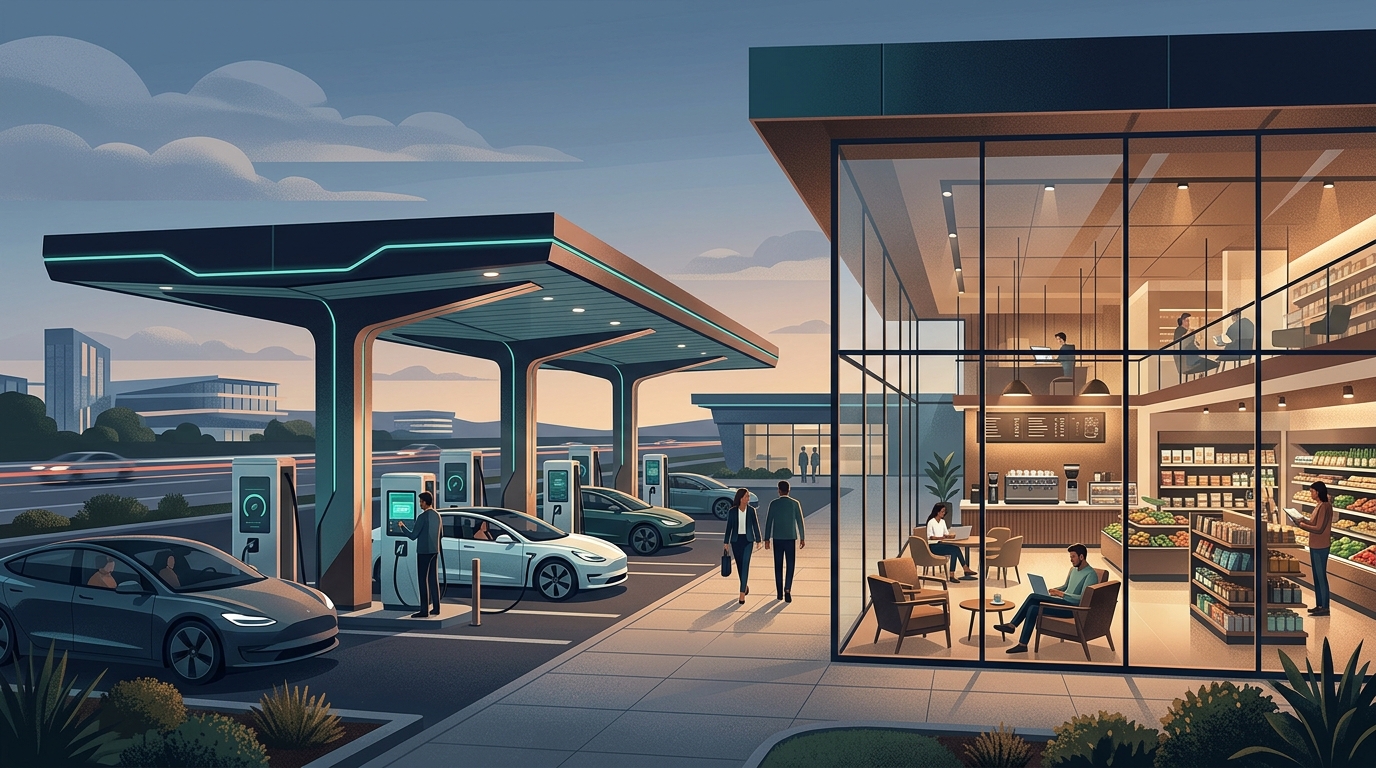
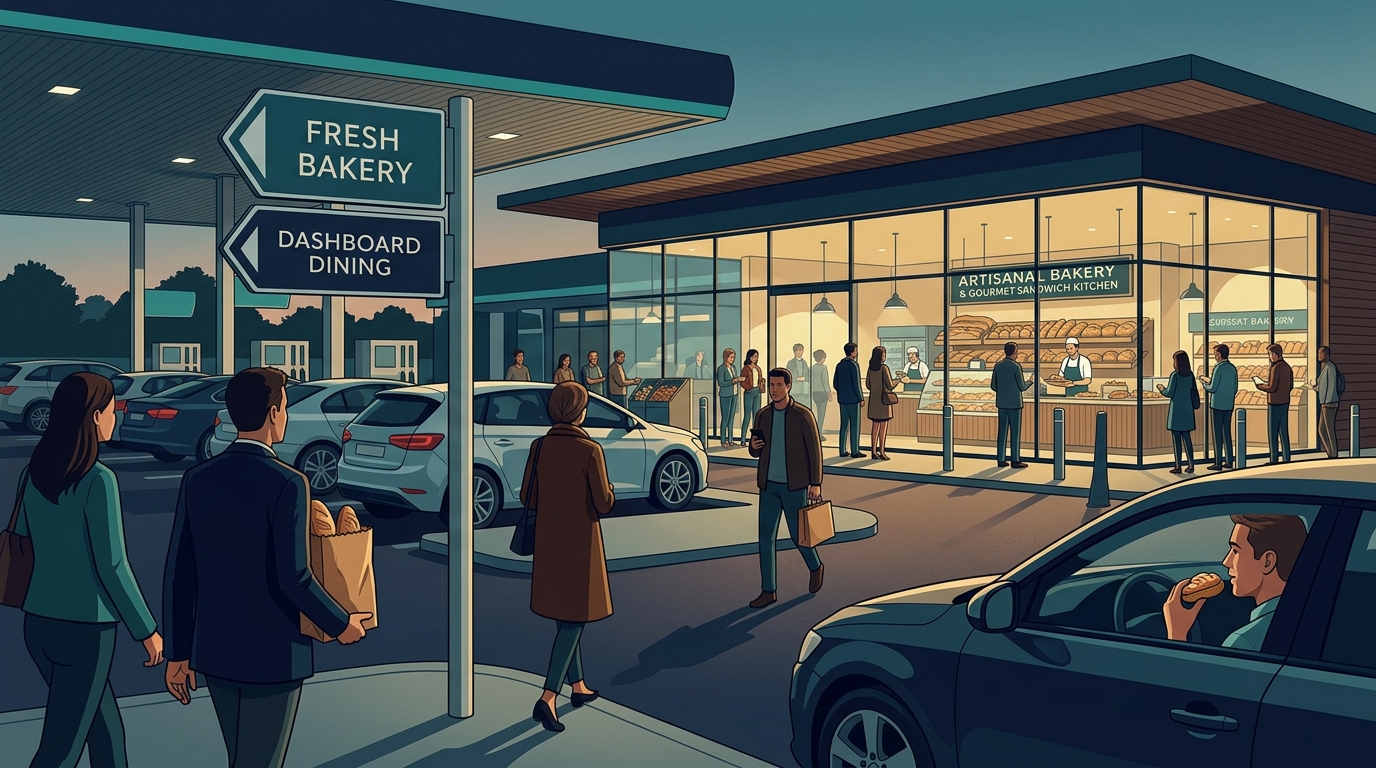
A recognised food brand and a proprietary offer create different responsibilities for a forecourt operator. The comparison should cover execution, support, customer demand and contribution—not simply the presence or absence of a franchise fee.
The possibility that charging visitors will spend in the shop is commercially useful. It becomes misleading when a single assumed dwell time or basket multiplier is presented as a fact across all sites.
This episode considers arrival, charging, store access and support as a complete customer visit. It replaces the former unsupported basket comparisons and market forecasts with practical questions for an operating trial.
Charging interoperability and retail loyalty are related business opportunities, but they are not the same service. A driver’s ability to use another operator’s charger does not automatically make that driver’s shopping rewards transferable between brands.
A forecourt bakery can be an attractive service for travellers and nearby customers. Whether it is commercially successful depends on the location, product quality, trading hours and execution. A claim that the sector has overtaken high-street bakeries requires comparable market evidence.
Hydrogen freight infrastructure should be assessed against the vehicles and routes it will serve. Announced ambitions, planned facilities and commissioned stations represent different levels of evidence.
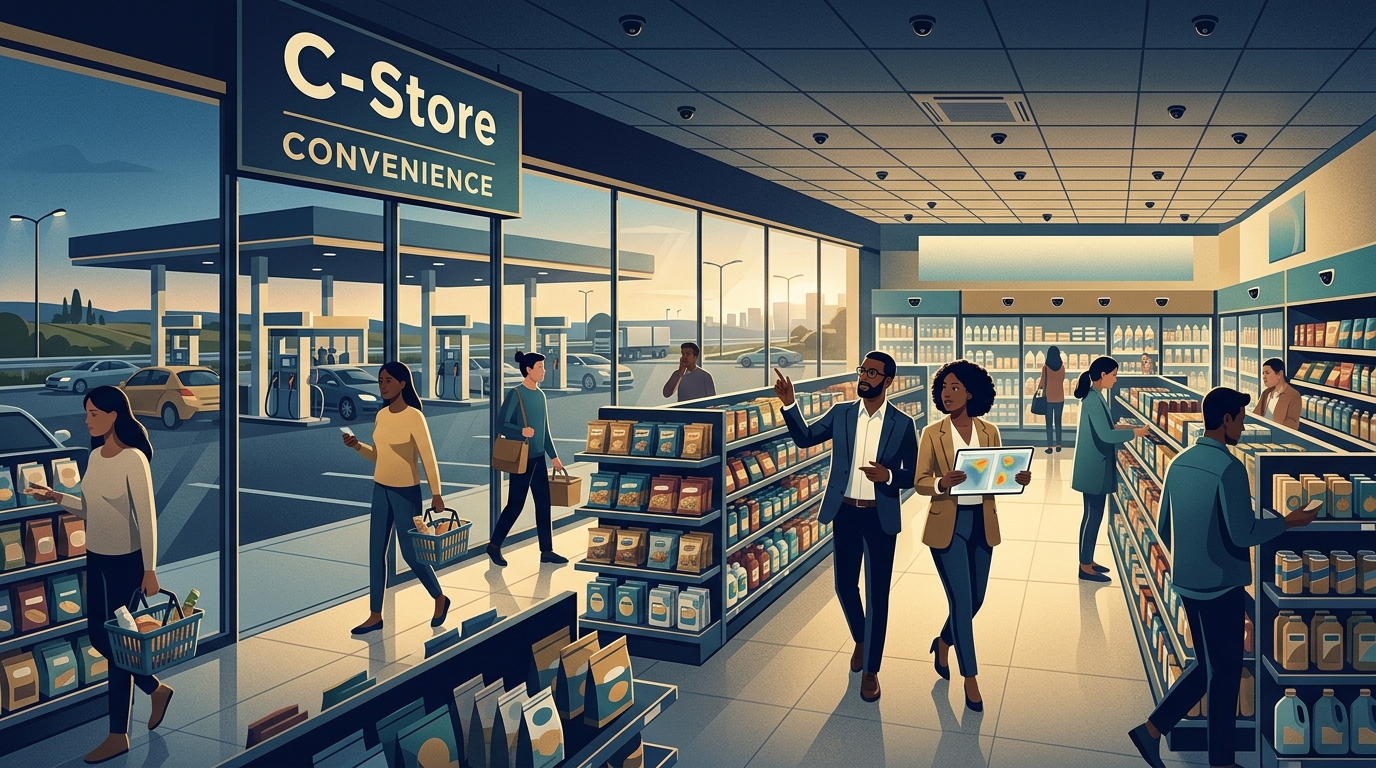
The briefing compares checkout formats and examines the customer exceptions that a trial must cover. It no longer presents unreferenced shrinkage or satisfaction figures as measured industry results.
This episode explains the difference between battery power and stored energy, why repeated charging demand matters, and what must be established before promising outage operation.
 Analysis