Ultra-Fast EV Hub Design and Automated Amenities: Operational Analysis of Flagship Charging Infrastructure
An operational breakdown of EnBW's newly opened Karlsruhe flagship charging hub, featuring up to 480 kW chargers, expandable stall architecture, automated vending amenities, and analytical frameworks for dwell-time monetization.
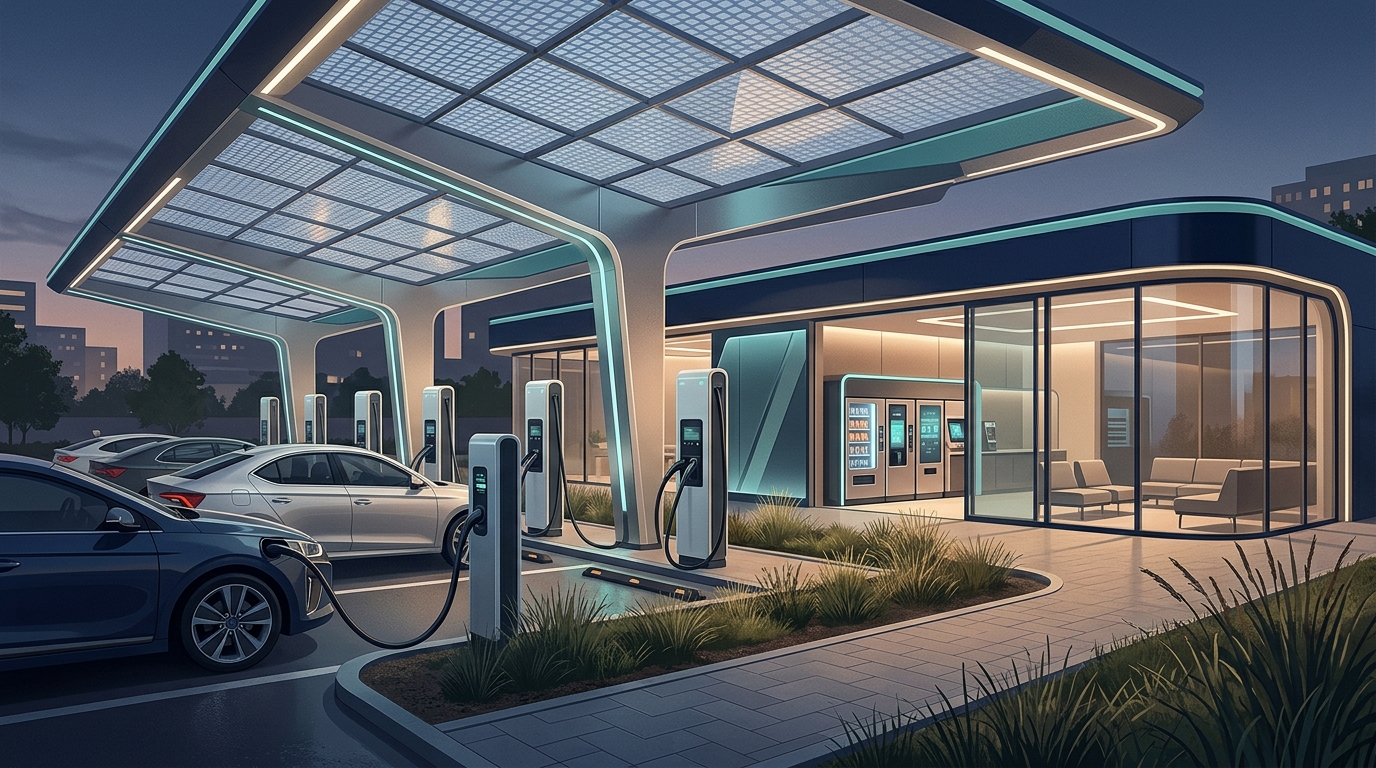
Editorial illustration
Sourced Infrastructure Developments and Technical Specifications
In September 2026, energy operator EnBW inaugurated a fast-charging hub at its headquarters in Karlsruhe, Germany, situated at the intersection of Gerwigstraße and Ostring near the A5 and A8 motorways, as reported by MobilityPlaza. The location functions both as a public fast-charging destination for local drivers and highway motorists and as an operational test facility for technologies intended for subsequent network-wide rollout across Germany.
The facility's initial layout comprises 12 high-power charging points, with site infrastructure designed to accommodate a future expansion up to 20 charging stalls. Hardware supplied by XCharge delivers maximum power ratings of up to 480 kW per charger. According to technical specifications cited by the operator, compatible electric vehicles can add up to 640 kilometers of range in approximately 20 minutes. The installed charging hardware incorporates dynamic power-sharing capabilities, allowing two vehicles to charge simultaneously at a single station while dynamically adjusting energy distribution.
The site is constructed with a wooden canopy made from sustainably certified timber and runs entirely on renewable electricity. Construction partner Leonhard Weiss stated that utilizing electric and alternative-fuel-powered construction equipment alongside an on-site solar and battery storage system reduced construction-related carbon dioxide emissions by up to 50 tonnes compared with standard building methods. Customer amenities at the site include a dedicated waiting area with seating, automated restrooms, and vending machines providing drinks, snacks, and coffee, with plans to integrate an automated pizza vending machine. Network-wide, EnBW operates more than 9,000 charging points across Germany.
Strategic Analysis: Dwell-Time Monetization and Load Management
*Note: The following section represents analytical evaluation and hypothetical operational frameworks derived by Forecourt News, clearly distinguished from the factual reporting above.*
Forecourt operators expanding ultra-fast charging locations must carefully distinguish peak hardware power ratings from actual vehicle charge intake curves. While hardware rated at 480 kW establishes a high theoretical maximum, real-world charge transfer rates depend heavily on vehicle battery architecture, state of charge, and thermal conditioning. Separating maximum equipment ratings from measured site throughput is crucial when modeling site turnover and power supply agreements.
Hypothesis 1: Automated Foodservice as a Low-Labor Dwell Monetization Tool
Integrating automated vending systems (such as coffee and fresh pizza vending machines) alongside dedicated indoor or covered waiting areas may capture higher non-fuel gross margins from charging visitors without increasing store staffing levels.
*Proposed Testing Methodology:* Operators should implement a structured six-month pilot across paired sites—comparing locations with automated food vending against locations featuring only standard seating. Key performance metrics to monitor include non-fuel sales volume per charging session, average spend per dwell minute, machine maintenance costs, and customer transaction times.
Hypothesis 2: Dynamic Power Sharing for Grid Capacity Optimization
Deploying chargers capable of dynamic power sharing across dual outputs enables operators to maximize station utilization during high-density demand periods without exceeding grid connection caps.
*Proposed Testing Methodology:* Over a 90-day evaluation period, operators should collect high-frequency load-profile telemetry during peak traffic hours. The evaluation should measure average charge delivered per 15-minute interval, queue formation times, and user session duration under single-port versus dual-port shared power configurations to verify if power sharing maintains throughput while remaining within peak grid allowances.
Operational Takeaways for Forecourt Operators
When evaluating high-power EV charging hub deployments, forecourt managers should observe three core operational principles:
- Capacity Staging: Differentiate immediate physical stall deployments (e.g., 12 active points) from backend grid and site capacity (e.g., civil works pre-configured for 20 points) to optimize initial capital outlay while preserving future scalability.
- Network Scale vs. Site Metrics: Keep national network size metrics (such as operating over 9,000 charging points) separate from individual location performance indicators when assessing capital allocation.
- Amenities and Dwell Integration: Design site layouts where waiting areas and automated concessions directly serve driver dwell periods without adding physical labor complexity to standard c-store operations.