Evaluating M&A Strategy in Australian Public EV Charging: Ampol’s A$225M Evie Acquisition
Ampol has agreed to acquire Evie Networks' parent company for A$225 million, adding over 1,030 charging bays in Australia pending ACCC clearance. This analysis examines network integration, reported operational metrics, and site-level testing strategies.
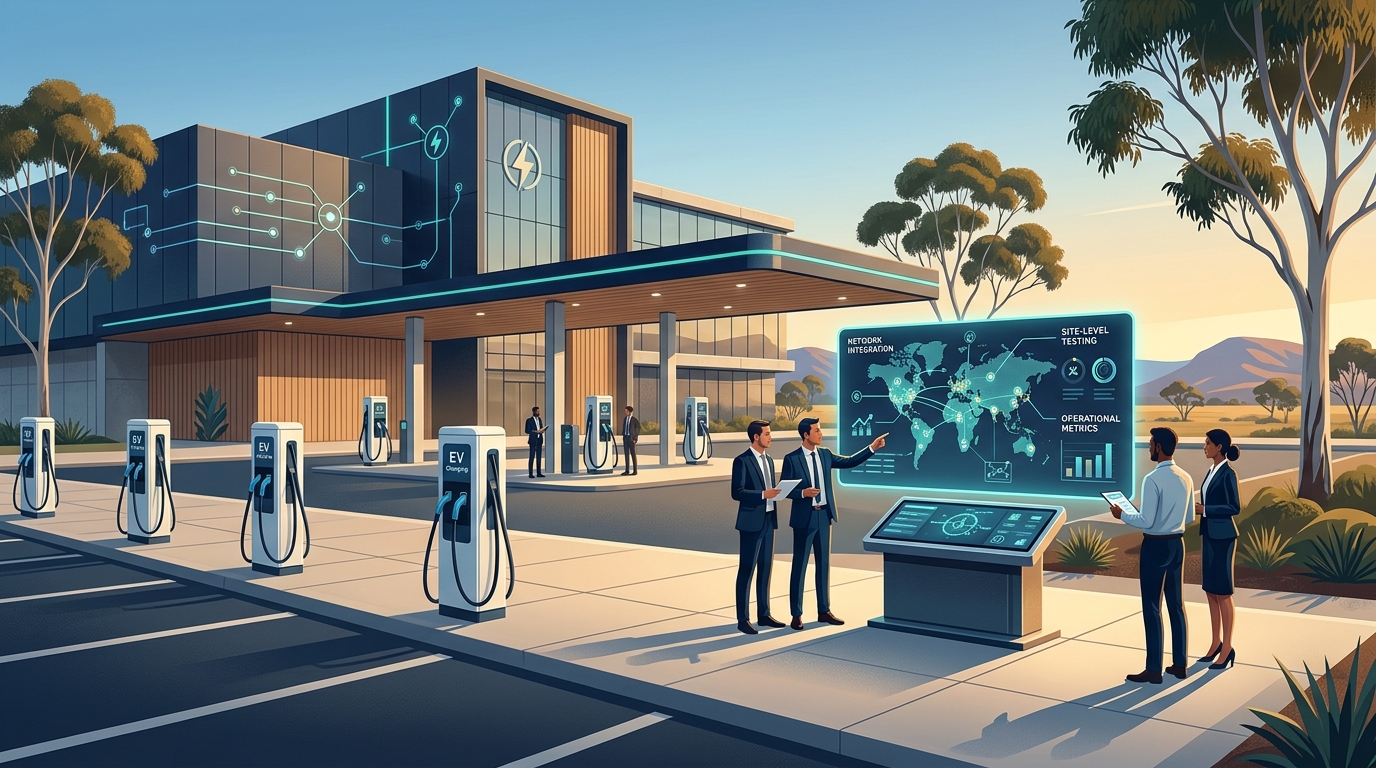
Editorial illustration
Evaluating M&A Strategy in Australian Public EV Charging: Ampol’s A$225M Evie Acquisition
Australian fuel retail major Ampol has entered into an agreement to acquire 100% of Fast Cities Australia Pty Ltd, the operating company behind Evie Networks, for A$225 million (approximately $145 million USD), according to reporting from MobilityPlaza. The transaction is subject to regulatory approval by the Australian Competition and Consumer Commission (ACCC) and is targeted for completion in the first half of 2027. Until regulatory approval is granted, Ampol and Evie Networks will continue to operate as separate business entities.
Transaction Terms and Infrastructure Totals
The acquisition structure involves adding substantial new additions to Ampol's infrastructure portfolio while expanding its nationwide footprint across Australia:
- Transaction Valuation: A$225 million (~$145 million USD) for 100% equity in Fast Cities Australia Pty Ltd.
- New Network Additions: Over 1,030 EV charging bays added via the Evie acquisition.
- Combined Network Totals: Approximately 1,425 charging bays across more than 400 nationwide sites when integrated with Ampol’s existing AmpCharge infrastructure.
- Regulatory Governance & Scope: Primary provision requires ACCC merger clearance for 100% acquisition; transaction completion is projected for H1 2027.
Market Adoption and Measured Performance
According to Ampol statements reported in October 2026, electric vehicles accounted for an average of more than 20% of new vehicle sales in Australia over the five-month period preceding the announcement.
Measured operational performance metrics reported by Ampol for its proprietary AmpCharge network during the first half of 2026 (H1 2026) compared to the prior year demonstrate significant utilization gains:
- Charging Session Growth: +116% increase in charging sessions.
- Energy Delivered Growth: +120% increase in total energy delivered.
Ampol Managing Director and CEO Matt Halliday stated that "disciplined investment at the right time" drives the company's EV charging strategy, emphasizing that the acquisition enables the group to expand its charging presence "at scale and at pace."
---
Analysis: Operational Implications and Investment Strategy
*Note: The following section reflects analytical interpretation by Forecourt News and is clearly distinguished from reported source facts.*
Scaling Infrastructure via M&A vs. Greenfield Development
For forecourt operators navigating transitioning transport markets, acquiring established charging networks provides immediate access to secured grid connection contracts, pre-selected sites, and active user bases. Developing charging hubs individually often incurs multi-year delays related to transformer procurement, local grid utility approvals, and civil works. Ampol’s acquisition of Evie Networks illustrates how fuel retailers can bypass site-by-site lead times to secure regional network density.
Disentangling Infrastructure Capacity from Utilisation Performance
Forecourt operators must carefully distinguish between total network capacity (such as combined bay counts) and measured throughput performance. While adding over 1,030 bays expands geographic reach, site-level profitability relies on session frequency and energy volume per bay. Ampol's reported H1 2026 performance (+116% sessions, +120% energy) provides evidence of growing demand, but integrating two distinct operational platforms introduces software, payment, and maintenance harmonization challenges.
Unmeasured Operational Hypotheses and Proposed Testing Protocols
It is frequently asserted in forecourt strategy discussions that integrating dedicated charging networks with convenience stores automatically increases shop spend and customer dwell time profitability. However, this cross-merchandising benefit remains an unmeasured hypothesis across merged sites.
- Hypothesis: Consolidating off-site or standalone charger locations into convenience forecourt loyalty networks raises average c-store basket size among EV drivers.
- Proposed Operational Test: Conduct a 90-day controlled trial across a representative sample of 30 newly integrated charging sites. Measure point-of-sale (POS) conversion rates and basket values of EV drivers using linked mobile payment applications against a control group of non-loyalty fast-charging visits. Compare net retail gross margin against site maintenance and software integration costs before making capital allocations for unified site re-branding.