Multi-Pressure Hydrogen Dispensing at Logistics Hubs: Evaluating Infrastructure Configurations and Fleet Integration
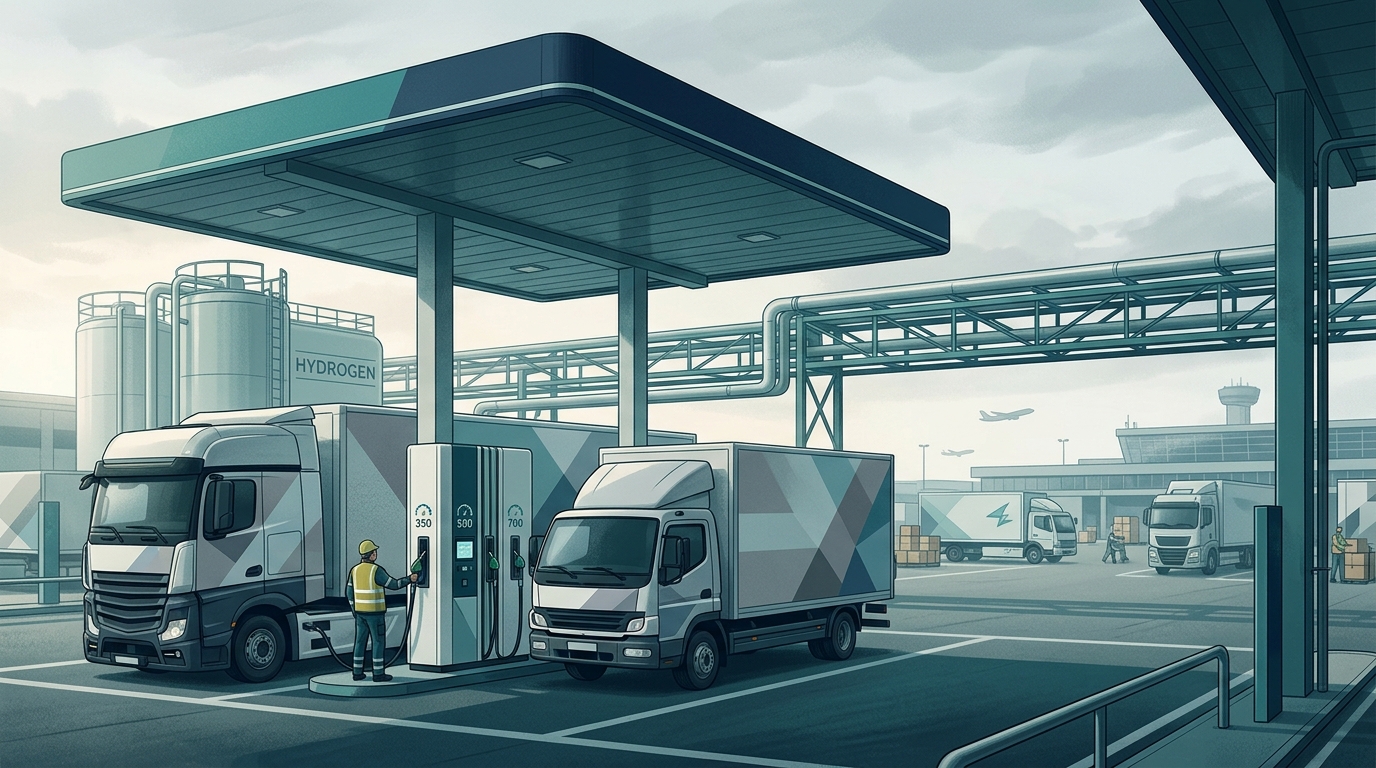
H2 Mobility has launched trial operations at a new hydrogen station near Hannover Airport, featuring dual dispensers across 350, 500, and 700 bar pressures. Supported by €5.8 million in German federal funding, the facility is being utilized by Schreck + Batz Logistik for real-world retail delivery trials.
Editorial illustration
Hydrogen Infrastructure Operational Analysis: Hannover Corridor Deployment
Sourced Network and Site Specifications
On September 23, 2026, H2 Mobility initiated trial operations at a new hydrogen refueling station located near Hannover-Langenhagen Airport in northern Germany. Positioned close to the A2 and A7 motorways along the European North Sea-Baltic transport corridor, the station is designed to provide refueling access for regional fleets and long-haul freight vehicles.
The infrastructure deployment includes two dispensers capable of servicing commercial trucks, passenger cars, and buses. The facility provides fueling capability at pressure ratings of 350, 500, and 700 bar, with reported typical dispensing cycles taking between five and ten minutes. In terms of feedstock compliance, the facility is supplied with green hydrogen that satisfies European Union Renewable Fuels of Non-Biological Origin (RFNBO) requirements.
The development was supported by public subsidies, receiving up to €5.8 million in funding from Germany's Federal Ministry of Transport via the National Innovation Programme for Hydrogen and Fuel Cell Technology.
Commercial Fleet Testing and Partner Statements
Alongside the opening of the site, Langenhagen-based logistics firm Schreck + Batz Logistik started testing a Hyundai XCIENT Fuel Cell truck within its regular operational workflows. The vehicle is being utilized on routes surrounding Hannover that were previously served by diesel trucks, including retail store delivery runs.
Commentary from transport management highlighted prior evaluations of alternative clean vehicle powertrains. Peter Röskes, Managing Partner of Schreck + Batz Logistik, noted that after testing battery-electric and LNG trucks, the company views hydrogen as "one of the most promising powertrain options for heavy-duty transport."
Additionally, H2 Mobility stated that the new location supports the continued rollout of hydrogen infrastructure for freight transport while helping businesses evaluate hydrogen-powered vehicles under everyday operating conditions.
Strategic Analysis for Forecourt and Fleet Operators
*Note: The following section represents independent analyst evaluation distinct from the reported source facts.*
Infrastructure Flexibility and Multi-Pressure Forecourt Layouts
Configuring a station with dual dispensers that support 350, 500, and 700 bar pressures addresses a key operational challenge in transition-era commercial forecourts: servicing mixed fleets. While heavy-duty trucks frequently utilize 350 bar or high-flow 700 bar systems, light commercial vehicles and passenger cars standardly mandate 700 bar connections. Forecourt operators planning multi-fuel hubs should note that providing multiple pressure standards on a single footprint maximizes asset utilization, but requires careful physical access planning to prevent large freight vehicles from blocking light-duty dispenser access during peak periods.
Turnaround Speeds and Fleet Duty Cycle Integration
The stated five-to-ten-minute refueling window presents a significant operational characteristic when contrasted with battery-electric charging durations for heavy-duty commercial vehicles. However, site operators must recognize that practical throughput depends on compressor throughput, storage buffer capacity, and system re-pressurization recovery times between back-to-back dispensing events.
Operational Hypothesis and Proposed Testing Methodology
- Hypothesis: Establishing a multi-pressure hydrogen station at a major motorway junction reduces total daily turnaround time for regional freight distribution fleets by at least 15% compared to high-power battery-electric charging, enabling higher vehicle utilization without adding spare units to the delivery fleet.
- Proposed Operational Test: Conduct a 60-day comparative monitoring study tracking equal-payload regional distribution routes serviced by fuel-cell electric trucks and heavy battery-electric trucks operating from the same logistics center. Measure total dwell time per refueling or charging event (including queueing, connection, dispensing, and payment), daily route completion rates, and driver duty-cycle availability. Record any station-side bottlenecks, such as compressor recovery delays or charging power throttle events, to establish true operational reliability.