Regional Banner Realignment and QSR Loyalty Mechanics: Operational Transition and Margin Controls
Yesway is converting 24 Texas stores to its Allsup’s brand by Q1 2027 while retaining a 26-store Yesway footprint across four states, demonstrating how multi-brand operators concentrate localized brand equity. Concurrently, Fatburger’s launch of its first loyalty program highlights the structured discount liability and enrollment mechanics inherent in modern foodservice loyalty programs.
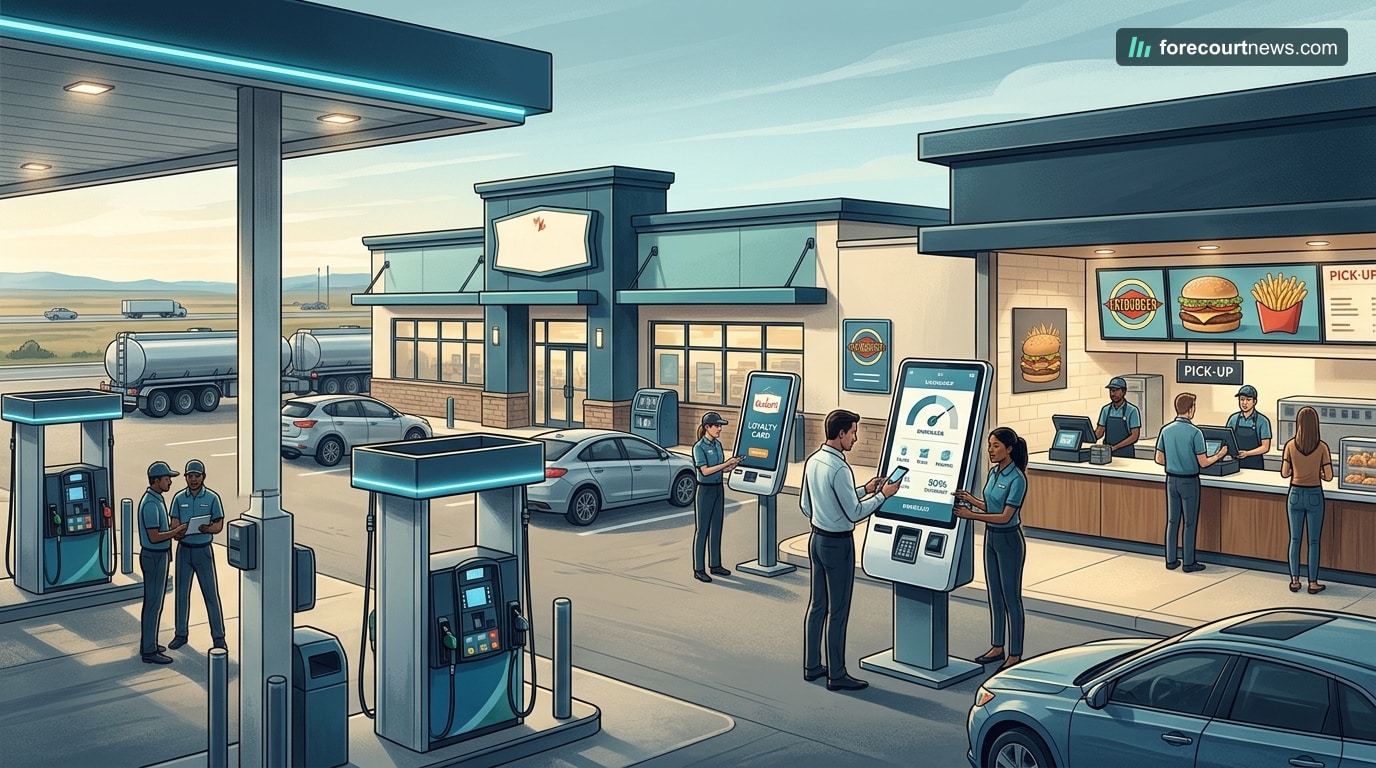
Editorial illustration
Siting and Brand Consolidation: Yesway’s Texas Rebranding
Convenience retail operators managing multiple retail banners face critical decisions regarding when to standardize under a single flag versus maintaining regional sub-brands. NACS reported that Yesway plans to convert 24 existing Yesway convenience stores in Texas into its Allsup’s banner, with execution scheduled for completion by the close of the first quarter of 2027. Yesway's chief real estate officer, Tom Brown, indicated that the conversion leverages the established customer loyalty, brand recognition, and regional legacy that Allsup’s holds throughout Texas.
Rather than executing a total brand erasure, Yesway is maintaining a dual-banner strategy. Following the conversion of the 24 Texas stores, the operator stated it will continue operating 26 Yesway-branded stores across four states alongside its expanding Allsup's network. The Allsup's brand has also served as Yesway's primary vehicle for geographic expansion, exemplified by the opening of its first-ever Allsup’s location in Arizona in October 2026, which marked the company's expansion into its tenth state.
Operational Mechanics of Dual-Banner Portfolios
Operating two retail flags within adjacent territories requires careful operational coordination. While single-brand consistency simplifies marketing procurement and uniform supply contracts, regional brands often command distinct foodservice followings and local loyalty that generic rebrands can disrupt. In Yesway’s deployment, concentrating the Allsup's banner across Texas and new western territories allows the company to align store formats with regional brand equity while keeping a focused 26-store Yesway footprint elsewhere.
For operators evaluating similar portfolio reorganizations, banner conversion involves more than changing exterior fascias and forecourt pylons. Store conversions require evaluating category mix, kitchen infrastructure, and point-of-sale (POS) menu configurations. If a heritage banner is known for proprietary hot foodservice items, introducing that banner into converted stores requires validating that back-of-house layouts, fryer capacities, and ventilation can support the legacy menu without creating kitchen bottlenecks.
Foodservice Loyalty Mechanics: Fatburger Rewards
As convenience operators expand prepared foodservice and quick-service restaurant (QSR) operations, loyalty architecture plays a central role in repeat customer retention. Restaurant Dive reported that burger concept Fatburger introduced its first digital rewards program, Fatburger Rewards, on October 8, 2026. The program's rollout follows major corporate restructuring; its parent entity was renamed OHG Brands after FBG Bid Co. acquired Fat Brands out of bankruptcy for $595 million in four separate transactions, trimming the portfolio from 18 concepts down to 12 following a January bankruptcy filing tied to over $1 billion in debt.
The loyalty program’s financial mechanics illustrate standard QSR value-exchange design. Under Fatburger Rewards, enrolled guests earn points at a rate of 1 point per $1 spent on eligible purchases. Redemptions are structured at a threshold of $5 off for every 75 points accrued. This establishes a baseline nominal rebate rate of approximately 6.67% on eligible spending, excluding promotional multipliers or app-exclusive bonuses. To drive initial member acquisition, the program offers new sign-ups an introductory incentive of $5 off an order of $20 or more, which remains valid for 30 days at participating locations.
Analysis: Balancing Loyalty Liability and Forecourt Margins
Retailers introducing structured point systems to forecourt food counters must account for balance-sheet liabilities and store-level redemption friction. Unredeemed points represent deferred revenue that must be tracked against operating cash flows. Furthermore, a baseline discount rate of nearly 7% demands tight cost-of-goods-sold (COGS) oversight, particularly on high-cost protein categories.
Operators considering point-based loyalty structures can test programmatic thresholds through controlled A/B geographic trials before system-wide launch:
- Redemption Velocity and Margin Impact: Measure whether point redemptions disproportionately cannibalize full-margin staple sales or successfully drive incremental side and beverage attachment.
- Onboarding Conversion Friction: Evaluate whether acquisition incentives—such as welcome discounts restricted to orders above a specific ticket size—increase initial basket values without elevating cashier intervention times during peak drive-thru or counter rushes.