Cross-Platform Loyalty Integration and Specialty Beverage Strategy in Convenience Retail
Forecourt and convenience store operators face rising competition as national quick-service restaurant brands push aggressively into specialty dispensed beverages and cross-platform loyalty integrations. McDonald’s has integrated its MyMcDonald’s Rewards program directly with Uber Eats fulfillment and Uber ride redemptions, while major QSR chains are scaling customized drink lineups to capture market share from traditional c-store cold vaults.
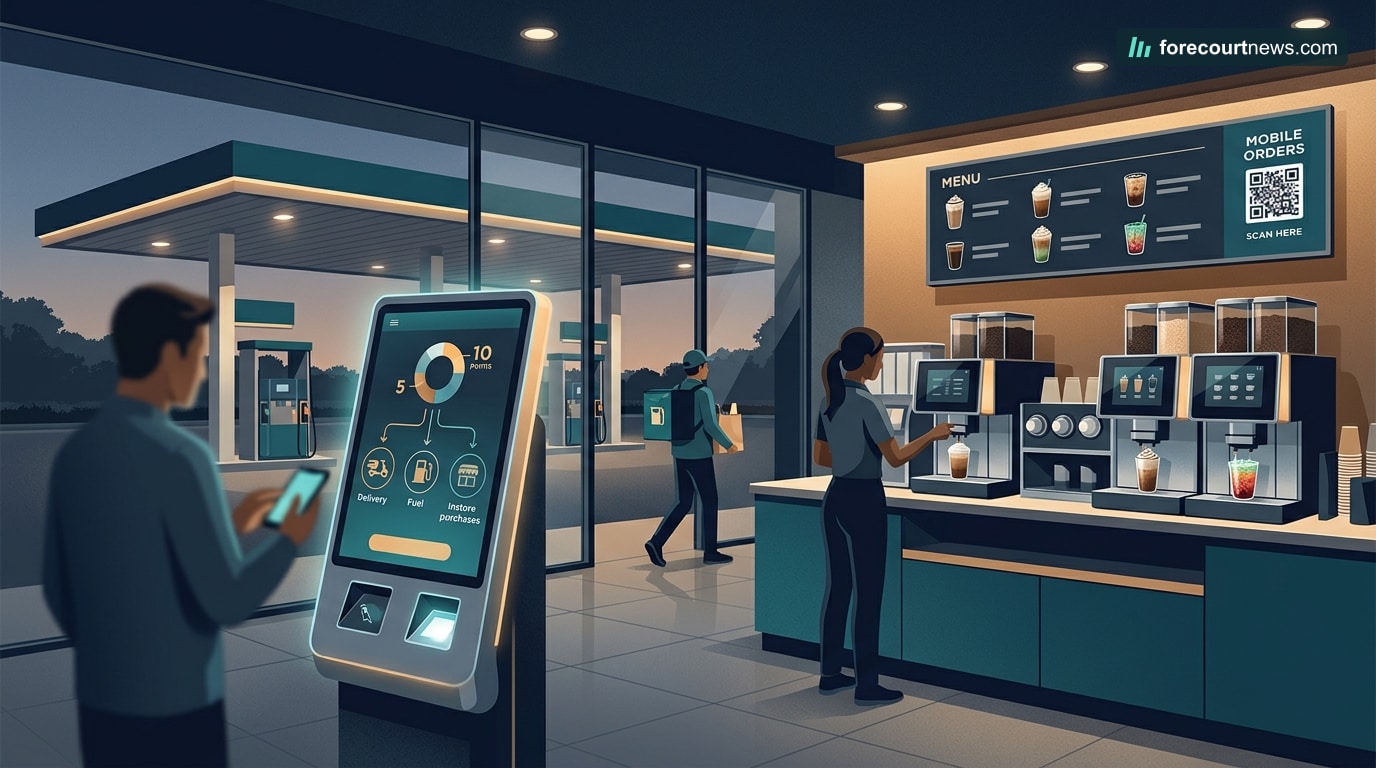
Editorial illustration
Convenience store operators are confronting aggressive competitive maneuvers from leading quick-service restaurant (QSR) chains across two traditionally reliable forecourt profit centers: customer loyalty ecosystems and high-margin dispensed beverages.
Cross-Platform Loyalty and Delivery Fulfillment
QSR networks are rapidly expanding digital reach by connecting proprietary loyalty engines with third-party delivery and mobility platforms. In November 2026, McDonald’s expanded its partnership with Uber, making Uber Eats the preferred integrated delivery fulfillment partner directly within the McDonald’s app. This integration allows consumers to place and monitor delivery orders inside the native restaurant application or directly via Uber Eats.
Crucially for convenience retail operators assessing digital retention tools, this agreement extends beyond off-premise logistics into loyalty currency exchange. Starting in November 2026, MyMcDonald’s Rewards members in designated trial markets can redeem accrued loyalty points on Uber ride offers through seasonal app activations. McDonald’s and Uber plan to expand functionality by enabling members to earn points on orders submitted through Uber Eats and redeem them for mobility services.
This cross-utility model reflects a broader strategic initiative called Make It Golden, designed to enhance McDonald’s app capabilities with tiered loyalty frameworks and integrated customer feedback. McDonald’s first partnered with Uber in the United States in 2017, and delivery is now active across 30 countries.
The QSR Push into Dispensed Specialty Beverages
Simultaneously, quick-service brands are targeting the specialty beverage category—historically a primary traffic driver and basket margin anchor for forecourt retailers. At the 2026 NACS Show in Las Vegas, McKinsey & Company partners Andrew Davis and John R. Moran highlighted that specialty beverages have emerged as an industry megatrend, citing statements from the McDonald’s CEO valuing the addressable space at $100 billion.
Consumer purchasing patterns, especially among younger cohorts, have shifted away from standard carbonated soft drinks (CSDs), hot coffee, and beer toward cold, caffeinated, sweet, and functional beverages. According to McKinsey’s analysis, Gen Z shoppers are 11% more likely than the average consumer to follow beverage trends and sample novel items. In response, QSR chains are redesigning menus to capture this volume:
- McDonald’s is introducing energy drinks such as Red Bull into dispensed drink offerings and integrating concepts tested at its experimental CosMc’s brand directly into the core footprint.
- Starbucks reports that a significant proportion of its volume has shifted from traditional coffee to matcha, chai, and refreshers.
- KFC has introduced its branded beverage platform called Kwench.
- Chick-fil-A launched Daybrite specialty beverages, while Taco Bell expanded its Live Mas Cafe platform.
- Focused drive-thru operators including Dutch Bros and 7 Brew continue expanding market presence.
Strategic Takeaways and Operational Hypotheses
For forecourt operators, defending dispensed beverage margins requires structured experimentation rather than defensive discounting. McKinsey practice leaders recommend that retailers maintain a deliberate pipeline of trial products, arguing that 10% to 30% of tested beverages should fail if an organization is sufficiently testing consumer boundaries. Operators should lean on supplier research and category management data rather than developing proprietary beverage formulations entirely in isolation.
*Hypothesis for Forecourt Operators:* Establishing localized loyalty point redemption partnerships with third-party delivery or micro-mobility providers may increase monthly active app usage and repeat visits among non-fuel shoppers. A measurable test would track 90-day retention and app-driven basket sizes across a control group versus a pilot cohort offered cross-platform mobility perks.