QSR Daypart Maximalism and Hospitality Labor Reallocation: Forecourt Analysis
An analysis of KFC's experimental 'Open House' format testing expanded dayparts, premium beverage lines, and table-service labor redeployment, with strategic considerations for forecourt foodservice operators.
Editorial illustration
Sourced Operational Developments
On September 24, 2026, Restaurant Dive reported that KFC is launching an experimental restaurant format in McKinney, Texas, named "Open House." According to KFC U.S. President Catherine Tan-Gillespie, the commercial strategy behind this location is termed "AUV-maxxing," focusing on expanding sales volume across non-traditional dayparts, channels, and service touchpoints rather than prioritizing capital or operational restraint.
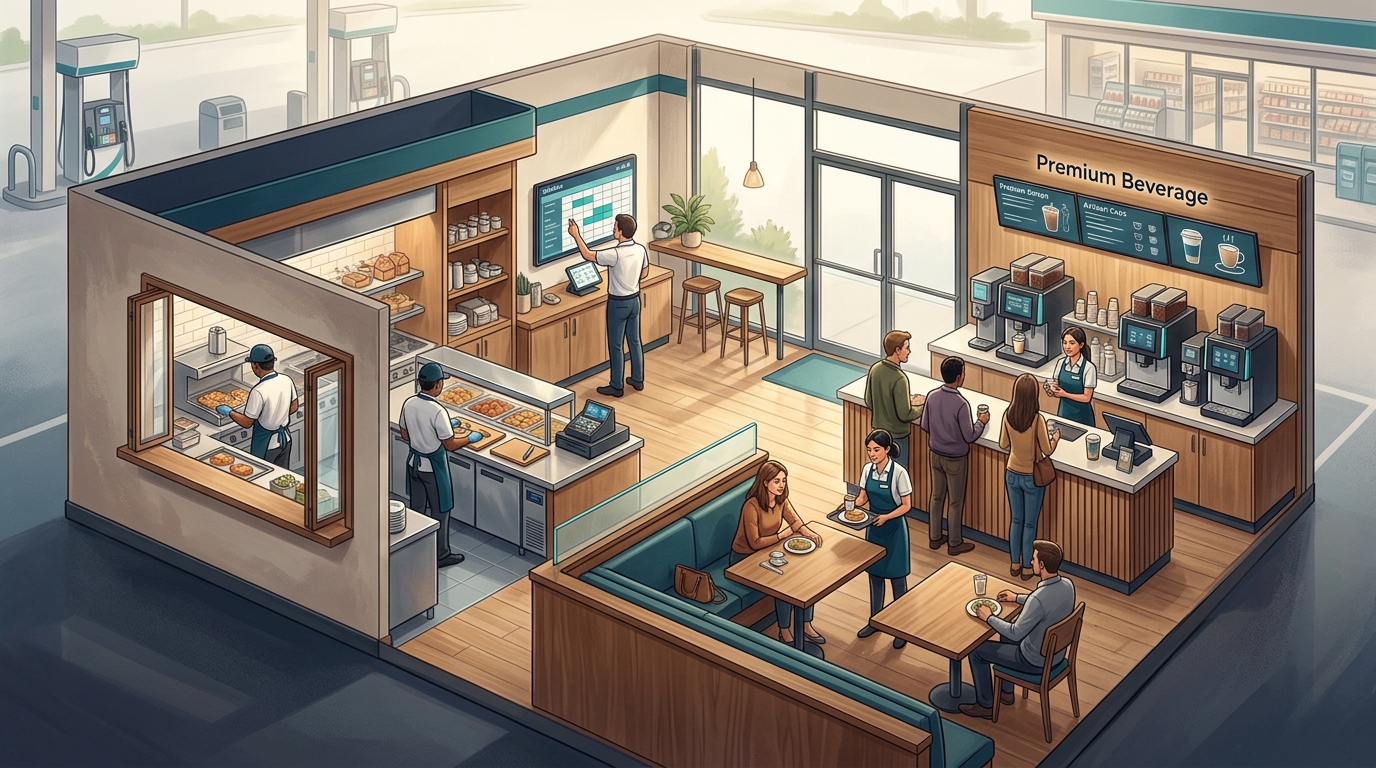
The format features a physical footprint of 3,400 square feet and accommodates 52 seated guests, contrasting with standard KFC stores that range between 1,700 and 3,000 square feet according to the chain's franchise disclosure document. Operating from 6 a.m. to midnight, the store introduces a dedicated breakfast menu—featuring items such as hashbrown sticks, mini cronuts, coffee, and iced lattes—alongside premium cold beverages derived from its international "Kwench" lineup (including boba refreshers and milkshakes).
Operationally, the brand is deploying ordering kiosks alongside artificial intelligence tools from Yum Brands' partnership with Nvidia. According to Tan-Gillespie, automation at the point of sale is intended to free up labor, which is then redeployed to front-of-house hospitality, delivery assembly, and table service while maintaining standard quick-service pricing.
Analysis: Evaluating High-Footprint QSR Models in Forecourt Settings
For forecourt and fuel retail operators, KFC's maximalist approach presents an interesting operational contrast to the lean, automated micro-kitchen models typically deployed in convenience environments. While traditional c-store operators prioritize minimal labor footprints and rapid transaction speeds, major QSR chains are testing whether expanded seating, broadened beverage tiers, and hospitality-focused labor can unlock higher average check sizes and capture off-peak site traffic.
However, applying a 3,400-square-foot, hospitality-heavy QSR model to a high-throughput forecourt or travel center introduces specific operational trade-offs:
- Space Allocation vs. Canopy Footprint: Expanding indoor dining to 52 guests requires substantial square footage that may compete with parking capacity, staging for EV charging, or high-volume c-store retail aisles.
- Labor Redeployment Dynamics: Reallocating staff from checkout counters to table service and order delivery assumes consistent customer dwell time across all dayparts (6 a.m. to midnight).
- Daypart Expansion Overhead: Introducing complex morning items and specialized cold drink lines (such as boba refreshers) increases equipment footprint, maintenance overhead, and back-of-house operational complexity.
Operational Hypotheses and Testing Protocols for Retailers
Because the financial impact of combining POS automation with table service and specialty cold beverages remains unmeasured in standard forecourt formats, operators should frame these strategies as hypotheses subject to controlled site testing.
- Hypothesis on Premium Beverage Conversion:
- *Hypothesis:* Introducing customizable, premium cold drink lines (such as iced lattes or boba refreshers) will increase afternoon (14:00–17:00) forecourt margin without degrading overall speed of service.
- *Proposed Test:* Deploy a specialized cold-beverage module at three high-volume forecourt sites for 90 days. Measure gross margin per labor hour and drive-thru/kiosk dwell times against baseline control sites offering standard fountain beverages.
- Hypothesis on Kiosk-Driven Labor Redeployment:
- *Hypothesis:* Reallocating register staff to guest hospitality and order-fulfillment runner roles will elevate customer satisfaction scores without increasing net shift hours.
- *Proposed Test:* Direct 100% of front-counter ordering through digital kiosks in select high-volume stores during peak morning shifts. Reassign cashiers to table delivery and dining room maintenance, tracking order fulfillment times and total labor costs against baseline historical periods.