Hoodless Kitchen Formats and POS Contract Governance in Forecourt Foodservice
Forecourt foodservice operators face critical operational choices: Chester's Chicken introduces a ventless grab-and-go model for compact footprints, while federal and state regulators sue Toast over commercial software fees and termination terms.
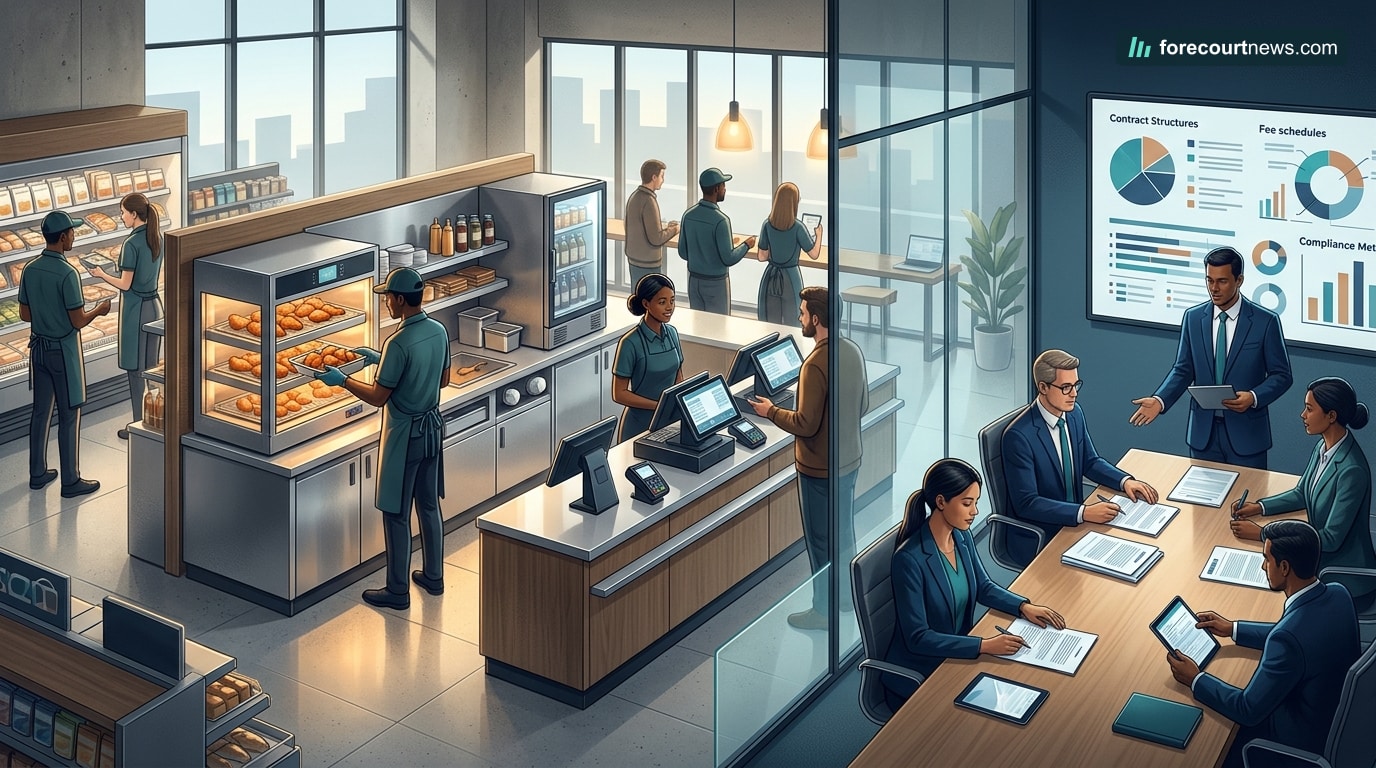
Editorial illustration
Footprint Constraints and Ventless Production
Forecourt operators expanding foodservice programs frequently encounter kitchen space and capital expenditure hurdles. Installing full commercial ventilation hoods and high-capacity fryers can demand substantial structural renovation and building permits. Quick-service brands are adapting by designing streamlined footprints for c-stores, truck stops, and supermarkets.
Chester's Chicken, an operator with approximately 1,200 franchised and licensed locations throughout the United States, Canada, and select international markets, launched a modular format called Chester's Express. According to the company, the model enables sites with constrained back-of-house space to deploy a grab-and-go foodservice program without requiring a conventional fryer and ventilation hood.
*Analysis: For fuel retail operators evaluating ventless formats, the primary operational check is whether product throughput matches peak dwell windows. A ventless model avoids commercial ductwork expenses, but operators must verify whether equipment batch sizes meet rush-hour meal volume without degrading hot-holding texture.*
Software Subscriptions and Point-of-Sale Vendor Governance
As operators integrate front-of-house ordering and back-of-house prep systems, point-of-sale (POS) operating agreements represent another critical governance area. On October 29, 2026, the Federal Trade Commission (FTC), joined by attorneys general from California, Colorado, Florida, Illinois, Iowa, Nebraska, Oklahoma, and Utah, filed a lawsuit against Toast in the U.S. District Court for Northern California.
The regulatory complaint alleges that the vendor enrolled merchants into auto-renewing subscriptions that average approximately $900 per month, based on the bundle of hardware terminals and add-on services selected. According to the plaintiffs, merchants frequently faced nonconsensual enrollment in add-on fees, encountered multi-step cancellation procedures requiring multiple internal teams, and were assessed unexpected early termination fees. The FTC and state officials also alleged that promised "24/7/365" customer support was not delivered as advertised, and noted that Toast previously collected an obscured 99-cent fee on digital orders exceeding $10 until July 2023.
In response, Toast publicly contested the claims, stating that it will defend its operations and noting that restaurant clients negotiate their individual service agreements. Toast also stated that the Restore Online Shoppers' Confidence Act (ROSCA) has not been applied by courts to negotiated business-to-business transactions.
Practical Contract Reviews for Operators
*Analysis: The regulatory action against Toast highlights the necessity of thorough contract hygiene when convenience retailers procure foodservice technology. Operators should conduct line-by-line invoice audits and avoid signing multi-year agreements without clearly documented cancellation mechanisms and verified service-level agreements (SLAs).*
- Audit Monthly Service Billings: Reconcile monthly software invoices against original executed agreements to ensure no unapproved module subscriptions or auto-renewals have been attached to individual terminal licenses.
- Validate Cancellation and Offboarding Clauses: Explicitly verify exit procedures, documenting whether high early termination penalties exist and identifying which vendor teams must authorize an account offboarding.
- Test Support Response Paths: Before standardizing across multiple retail forecourt sites, execute test calls during late-night or weekend operating windows to assess if vendor help desks provide the advertised continuous responsiveness.