High-Power EV Hubs: Design the Visit as Carefully as the Charger
A high-power charging hub has to deliver an understandable, dependable visit. Maximum charger output is one part of that offer; access, payment, assistance and the route to the store also matter.
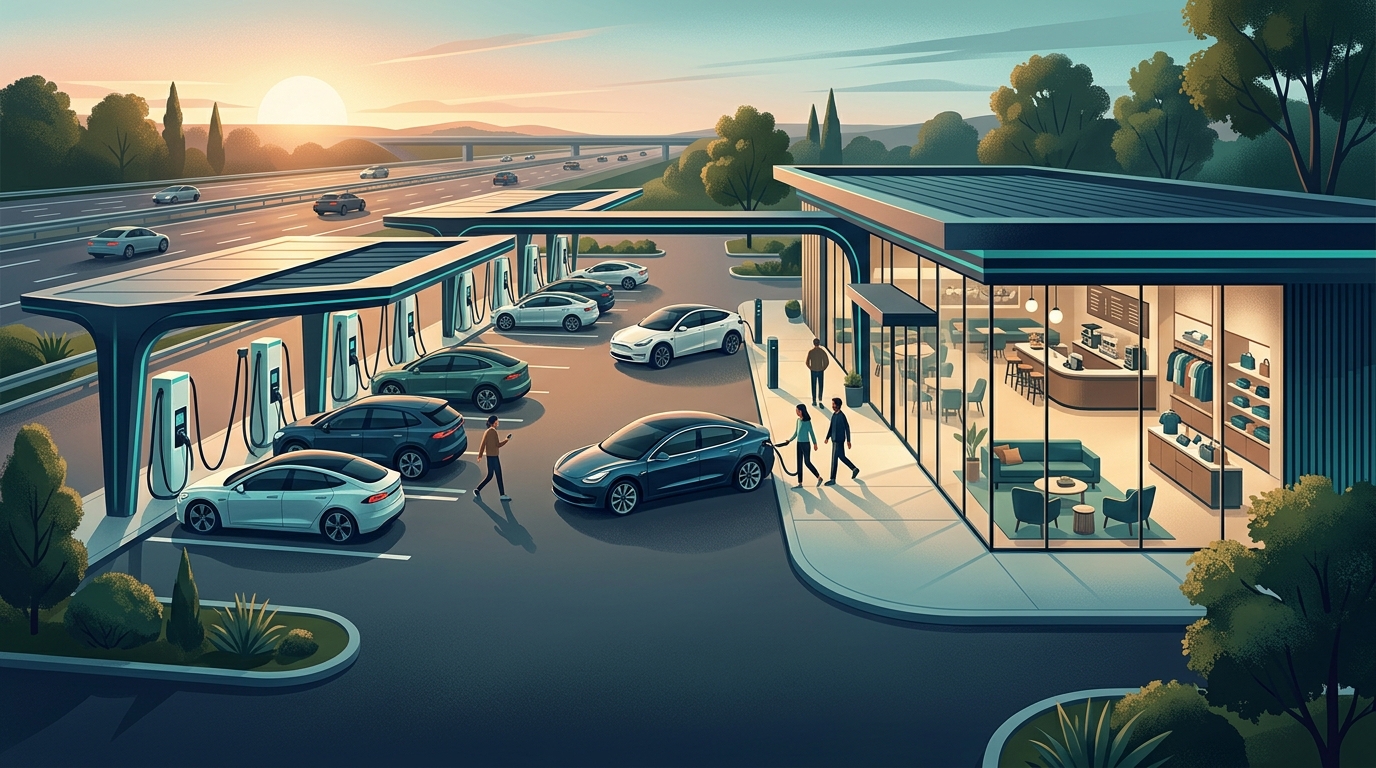
Editorial illustration
A high-power charging hub has to deliver an understandable, dependable visit. Maximum charger output is one part of that offer; access, payment, assistance and the route to the store also matter.
Separate equipment capability from delivered service
Specify the number of vehicles the site is expected to serve simultaneously and the power available under those conditions. A label on a dispenser is not a promise that every connected vehicle will receive that output or complete charging within a fixed time.
Charging management standards can support communication between equipment and backend services. They do not replace testing of the actual installation and its customer journey. Open Charge Point Protocol
Analysis: follow the customer through the site
Walk the arrival route, charging bays and path to the shop. Look for confusing signs, blocked sightlines, inaccessible facilities and conflicts between pedestrians and vehicles. Make opening hours and assistance arrangements clear before the customer leaves the charging area.
Test payment, starting and stopping a session, obtaining a receipt and reporting a problem. Record successful energy delivery as well as whether equipment appears online. Decide who owns an incident that involves the vehicle, charger, communications provider and payment service.
Build a realistic commercial model
Treat charging income and store contribution as related but separately measurable. Do not assume that every visitor enters the shop or spends a fixed multiple of a fuel customer’s basket. Compare visits by daypart and include maintenance and customer-support costs.
If the grid connection constrains service, compare managed charging, staged expansion and storage using site-specific demand. Battery buffering can be useful, but additional cost and depletion risk need assessment. Battery Energy Storage for Electric Vehicle Charging Stations
Set the service targets in the contract and validate them in operation. A credible hub strategy should explain its capacity and recovery plan under difficult conditions, not rely on an unsupported industry-wide uptime or profit forecast.