European Regulatory Timelines and Forecourt Retail Governance Benchmarks
EU co-legislators have agreed to a two-year postponement of the EU methane import requirements, giving downstream operators until a 2028 review to address verification and accreditation gaps. Concurrently, European forecourt executives gathered in Hamburg to benchmark non-fuel retail and food-led mobility strategies.
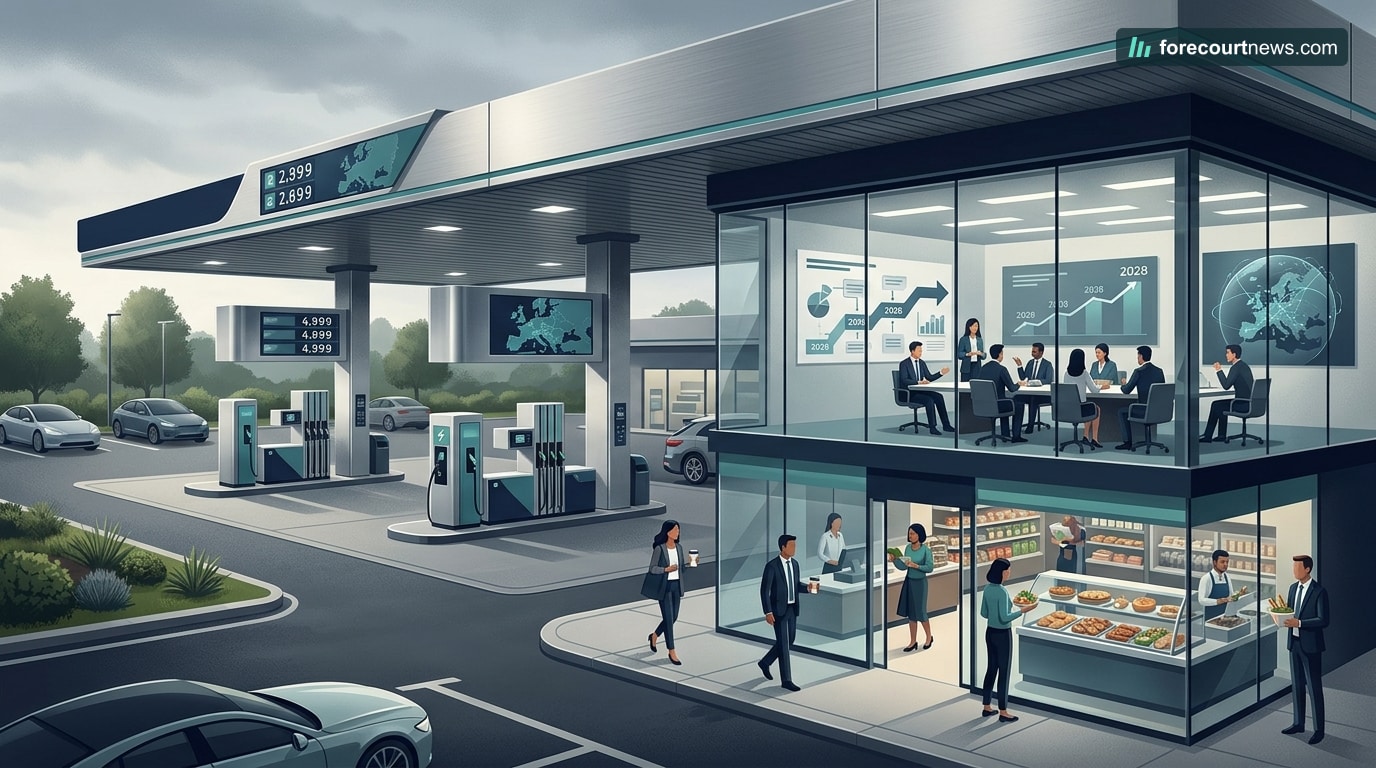
Editorial illustration
Legislative Relief on EU Methane Import Requirements
European Union co-legislators have agreed to grant a two-year postponement for the implementation of upcoming EU methane import requirements, according to an industry update from FuelsEurope published on 19 November 2026. The postponement provides commercial downstream operators, refiners, and importers interim relief from complex reporting requirements while critical administrative frameworks remain under development.
According to FuelsEurope, significant implementation challenges remain before the rules can function effectively. The European Commission and Member States still need to establish verification and compliance frameworks, build adequate third-party accreditation capacity, and issue practical administrative guidance for cross-border transactions. A formal review scheduled for 2028 will assess operational readiness and review any lingering barriers affecting industrial competitiveness or security of supply. While trade association FuelsEurope argued that the duration of the postponement should be adequately extended if the 2028 assessment reveals persistent implementation deficits, co-legislators have formally authorized only the initial two-year delay.
Operational Implications for Downstream Compliance
For fuel wholesale buyers and forecourt operators sourcing imported refined product or crude feedstocks, the legislative delay provides breathing space but does not eliminate long-term audit exposure. Treating the two-year window as a complete compliance freeze risks operational disruptions when statutory reporting requirements eventually take effect.
An operator could test whether their primary fuel suppliers possess auditable upstream emissions telemetry by requesting sample certification chains. Verifying that international upstream partners have contracted with accredited auditors will help operators identify compliance gaps early. If supply contracts are up for renewal between 2026 and 2028, compliance clauses should explicitly define which party bears verification liabilities once Member State implementation acts are enacted.
Convenience Retail Governance and Non-Fuel Strategy
While upstream supply chains adapt to regulatory adjustments, downstream network strategies continue shifting toward non-fuel revenues, convenience merchandising, and food-to-go formats. On 11 November 2026, industry leaders met at the Literaturhauscafé in Hamburg, Germany, for the European Female Leaders in Convenience Awards, organized by The Retail Marketeers, presented by PDI Technologies, and partnered with forecourttech.
The ceremony took place during the 10th Convenience Leaders Convention under the operational banner "DEFCON 3: Mobility Retail." Honorees recognized for leadership in non-fuel sales, network development, and merchandising included Agnieszka Bobrukiewicz (Executive Director Non-Fuel Sales across Poland, Austria, Germany, Lithuania, Czech Republic, Slovakia, and Hungary at Orlen), Alicia Cruzado Lopez (Senior Manager of Franchise Development and New Business at Repsol), Louise Eckford (Head of Property, Planning & Transformation at Marks & Spencer Channels), Judy Glover (Head of European Merchandising at Circle K Europe), Zsuzsa Hordai (Head of Strategic Projects at SPAR International), and Anna Wallenberg (CEO of Reitan Convenience Sweden).
The convention brought together executive delegates from European fuel and convenience networks, including BP/Aral, Shell, Moeve, EG Group, Valora, and Tank&Rast. Discussions focused on managing footfall conversion as forecourts transition into passenger-oriented, food-led mobility hubs. Beyond Europe, forecourttech announced that its regional conference series will expand to Latin America with forecourttech LATAM, scheduled for 17–18 March 2027 in Cancún, Mexico.
Managing Upstream and In-Store Capital Allocations
European forecourt operators face a dual operational mandate: monitoring upstream supply regulatory deadlines while reallocating capital to higher-margin retail store footprints. As compliance timelines extend to 2028, retailers can direct immediate management attention toward store-level execution.
Operators evaluating convenience upgrades should audit store space allocation between traditional fuel cashier counters and prepared food or beverage programs. By benchmarking merchandising strategies against European regional peers, retail directors can determine whether expanded grab-and-go selections produce measurable basket-size lifts before committing to full kitchen refits across secondary sites.