Enefit and Olerex Expand Estonia EV Charging Network with 57 High-Power Units and Battery Storage
Enefit and Olerex are expanding their Estonian EV charging network by adding 57 chargers with maximum power ratings up to 300 kW across 15 counties, featuring card payment terminals, mobile app integration, and a battery-buffered ultra-fast charger on the Tallinn-Tartu motorway.
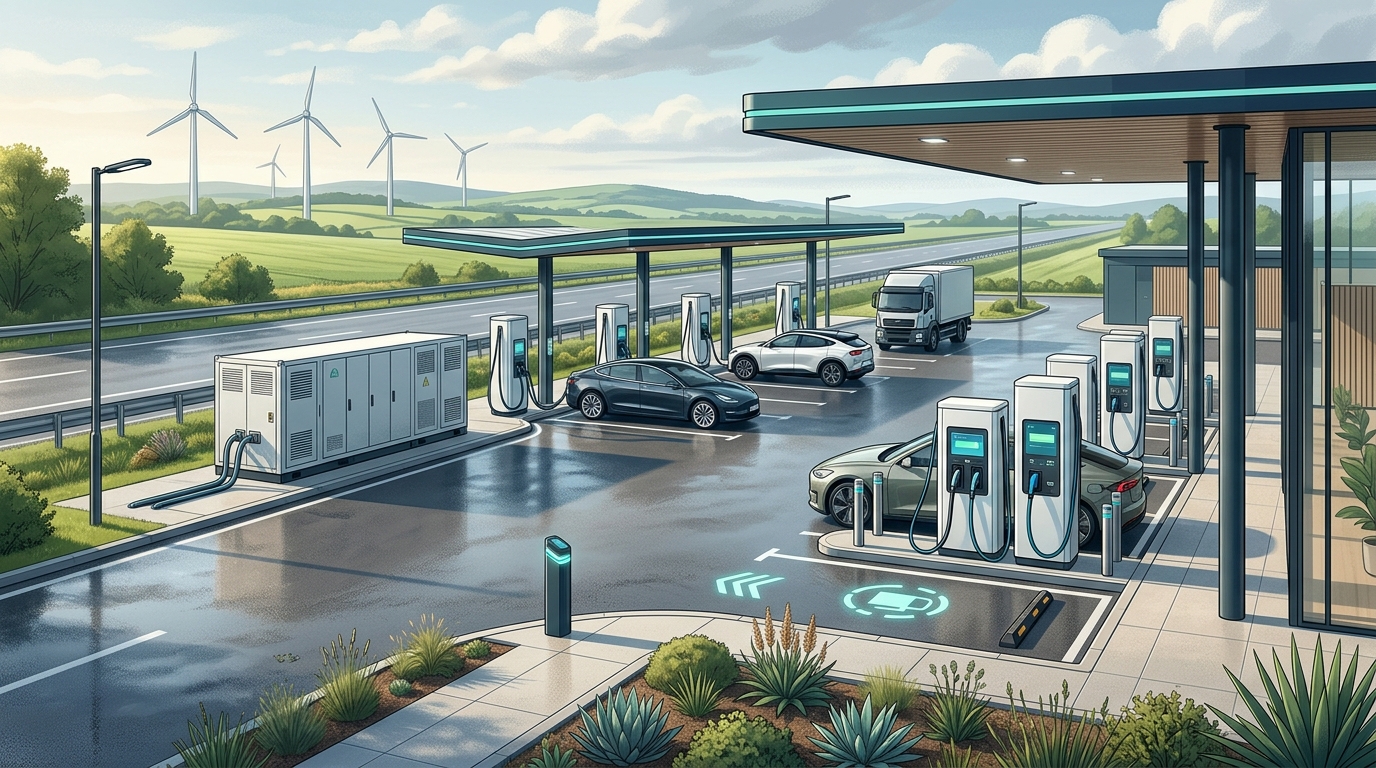
Editorial illustration
Baltic EV Network Expansion: Enefit and Olerex Infrastructure Rollout
Strategic Network Expansion and Hardware Specifications
In July 2026, Estonian energy provider Enefit and fuel retailer Olerex announced an expansion of their joint electric vehicle (EV) charging infrastructure across Estonia (forecourttech.com). Under this project phase, Enefit will deploy an additional 57 EV chargers at Olerex forecourts. The hardware units feature maximum power ratings ranging from 47 kW to 300 kW. Measured operational delivery metrics or actual energy throughput figures were not disclosed in the project announcement.
This buildout expands on a commercial relationship dating back to 2014, when 17 chargers were installed at Olerex locations under the Estonian Electromobility Programme (ELMO), an initiative established by the Estonian government in 2011. The current expansion targets geographic coverage across all 15 Estonian counties, including island regions, placing high-power chargers at major transport hubs and key transit corridors.
Payment Integration and Interface Conditions
To streamline point-of-sale operations, the expansion introduces multi-channel payment options. Drivers will be permitted to initiate and pay for charging sessions using the Enefit mobile app, Enefit charging RFID card, or the Olerex mobile app. Additionally, every newly installed charger will feature an integrated physical payment card terminal. This hardware requirement enables pay-as-you-go credit or debit card settlement without requiring account registration or software downloads prior to charging.
Regarding connector compatibility, Enefit confirmed ongoing network support for the legacy CHAdeMO charging standard alongside modern standards. The joint deployment plan specifies a minimum threshold of at least one active CHAdeMO charging point in every Estonian county to serve legacy vehicle fleets.
Battery-Buffered Fast Charging Systems
The deployment strategy includes an innovative hardware configuration at the Olerex service station situated along the Tallinn-Tartu motorway. This location will feature an ultra-fast charger paired with an integrated battery energy storage system (BESS).
According to statements attributed to Robert Kutsar, Head of E-Mobility Business Development at Enefit, the battery-buffered system helps optimize station power consumption and mitigate grid peak loads. Kutsar stated that this configuration allows consumers to access ultra-fast charging capabilities while billed under lower slow-charging tariffs (capped up to 100 kW pricing tiers). Furthermore, Kutsar indicated that the integrated battery storage allows charging operations to continue during localized power grid outages.
In executive comments, Antti Moppel, Board Member at Olerex, highlighted that fast-charging hardware is becoming standard site equipment across Olerex stations. Moppel also noted that because Olerex's addressable market spans the broader Baltic region, roaming integration into Enefit’s pan-Baltic charging network is critical for cross-border commercial alignment.
Independent Analysis for Forecourt Operators
Operational Hypotheses and Testing Frameworks
- Hypothesis 1 (Grid Load Management & Tariff Optimization): Installing battery-buffered fast chargers at highway forecourts lowers operational demand charges and prevents grid upgrade expenditures while maintaining service during blackout events.
- *Proposed Test:* Forecourt operators should track monthly utility demand charges, peak kilowatt spikes, and uptime logs over a 12-month evaluation window on the Tallinn-Tartu motorway site, comparing expenditures against a control site with direct grid-tied 300 kW chargers.
- Hypothesis 2 (Payment Terminal Friction Reduction): Providing direct credit card payment terminals on site increases charger utilization from transient non-subscription drivers compared to app-only payment models.
- *Proposed Test:* Measure session initiation success rates, average dwell times, and customer payment type breakdown (app vs. card terminal) over a six-month monitoring period across newly equipped forecourts.
- Hypothesis 3 (Cross-App Integration & Customer Retention): Enabling session initiation through fuel retailer mobile apps increases store foot traffic and cross-merchandise sales compared to third-party app access.
- *Proposed Test:* Analyze point-of-sale transaction logs matching EV charge start timestamps from the Olerex app with in-store convenience store purchases over a 90-day trial period.
Forecourt Implementation Checklist
- Grid Infrastructure vs. Storage Analysis: Evaluate local grid connection costs against battery-integrated charger installation costs for highway sites subject to utility capacity limits.
- Payment Compliance: Ensure direct credit/debit card payment terminals meet local payment regulations and operational uptime standards without mandatory app registration.
- Legacy Connector Allocation: Audit regional fleet demographics to determine whether maintaining dedicated CHAdeMO capacity is economically viable or required by regional mandates.