Accessible Charging: Walk the Route Before Approving the Layout
An accessible charging visit includes the bay, cable, controls, payment and route to amenities. Design guidance and enforceable obligations must be distinguished.
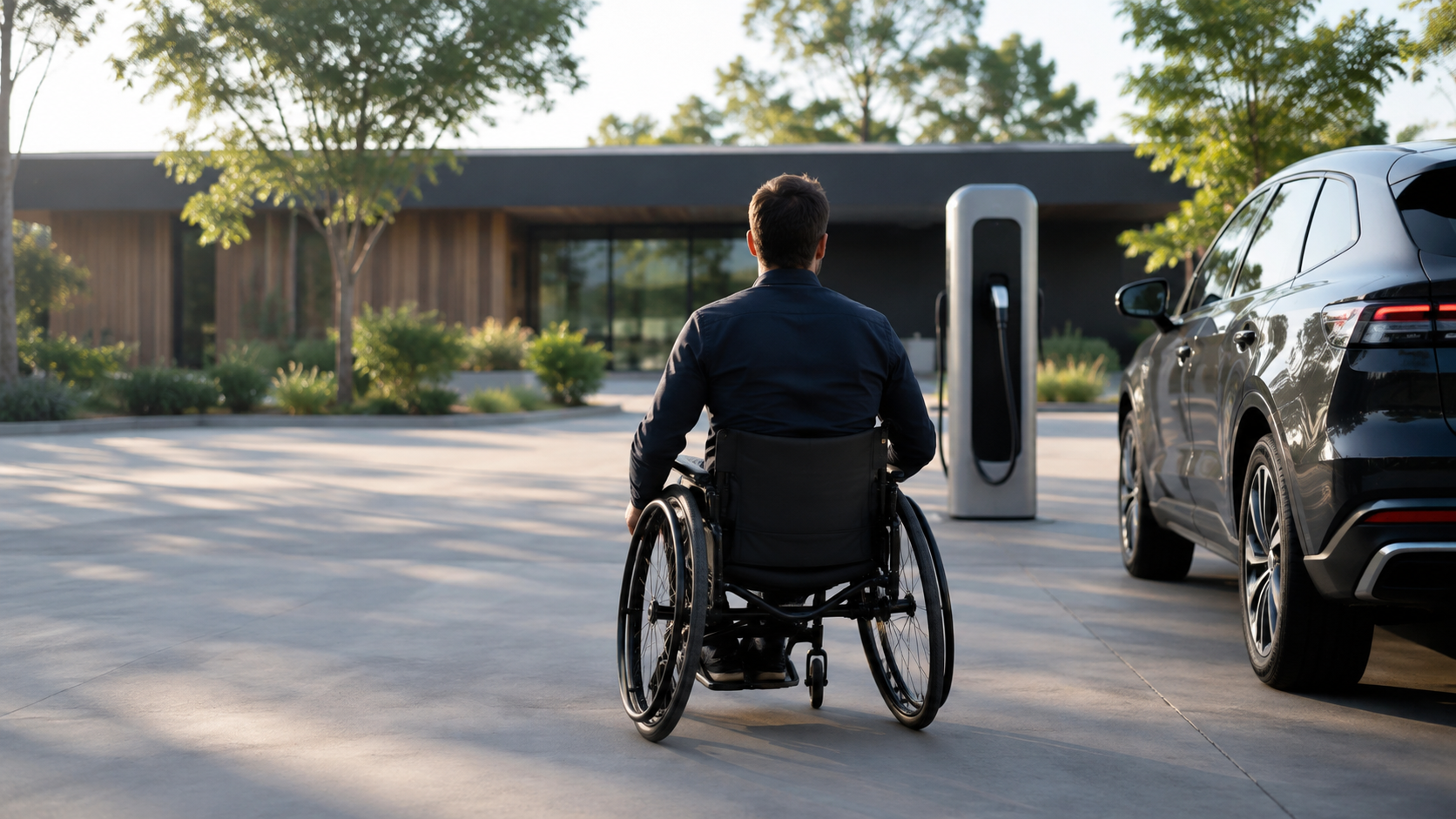
Editorial illustration
A charging bay can look generous on a drawing and still be difficult to use. The cable may be hard to reach, a protective bollard may obstruct the controls, or the path to the store may interrupt the journey. For site owners, accessibility deserves an operational review that follows a person through the visit.
Understand what the reference establishes
The US Access Board’s EV technical-assistance document addresses physical access, communication features, controls and charging-station layouts. It explicitly distinguishes existing requirements from additional recommendations. Its recommended details should not be relabelled as universally binding specifications. Existing accessibility obligations can still apply even without an EV-specific provision. Access Board charging design guidance
The Board’s EV rulemaking page identifies a September 2024 proposal. A proposal and technical assistance are not, by themselves, evidence that a particular new standard has taken effect. Before procurement, establish which enforceable requirements and local rules apply to the actual project and check for subsequent changes. Access Board EV rulemaking record
Operator analysis: test the complete visit
Our recommendation is to involve people with relevant access needs and a qualified designer before the layout is fixed. Follow arrival, parking, reaching the connector, interacting with the interface, payment, assistance and departure. If the site includes a store or QSR, review that route as part of the service offer.
Try the intended charger and cable arrangement with the vehicle positions the design must accommodate. Ask whether a customer can operate it independently in those positions. Identify where cable management, obstacles or adjacent traffic could create a problem. A generic equipment brochure cannot establish usability for a particular bay.
Include communications in the exercise. Assess how a customer locates instructions, understands an error and contacts support. Do not make a smartphone demonstration the only test of a public service. The actual payment and assistance arrangements should be reviewed with the applicable accessibility requirements in mind.
Preserve accessibility after opening
Our proposed maintenance checklist includes obstructions, damaged surfaces, cable storage, lighting and the usability of controls. Give staff a way to report access problems and make the responsible owner clear. A layout can change in practice when deliveries, temporary signs or maintenance equipment occupy a route.
When equipment is replaced, revisit the reach and operating position rather than assuming the old approval transfers unchanged. Update published site information when service conditions change. An access description should help a driver decide whether the site meets their needs; it should not promise features that have not been assessed.
Evaluate the result without an invented uplift
Track observed usability issues, assistance requests and closure of corrective actions. Treat feedback as evidence about the tested journey and participants, not as a universal satisfaction score. Do not attach a forecast revenue uplift unless there is a defensible local study.
The business case is stronger when accessibility is specified early, checked in practice and maintained. This article provides an operating review framework; it does not certify a design or replace assessment by the responsible professionals.