Regulatory Uncertainty and Autonomous Payments in European Fuel Retail
This briefing analyzes European Commission recommendations on the EU Methane Regulation alongside emerging agentic commerce payment models for fleet and forecourt operators.
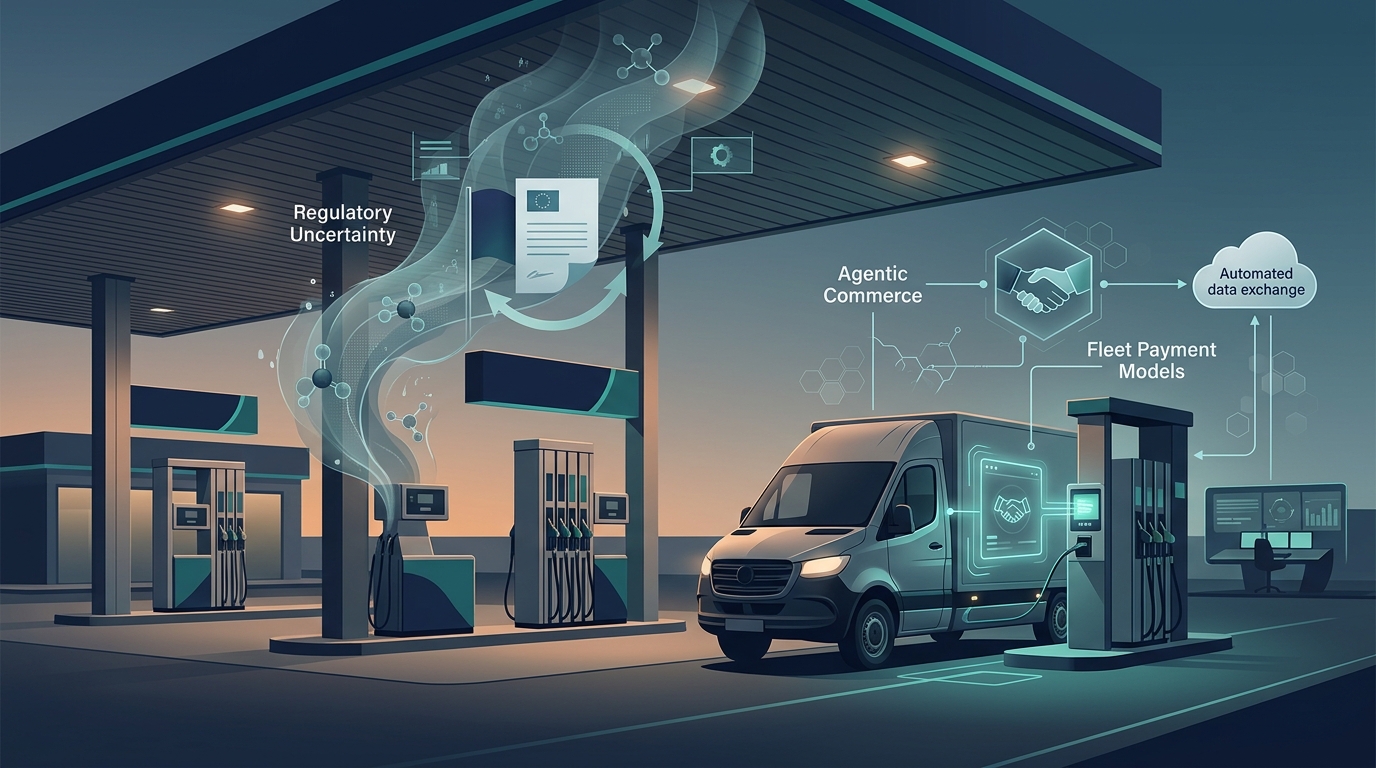
Editorial illustration
Regulatory Uncertainty and Autonomous Payments in European Fuel Retail
European fuel operators and refiners face operational challenges spanning regulatory compliance and digital payment technology. This review examines regulatory warnings from industry trade groups alongside emerging digital payment developments across mobility networks.
Regulatory Scope: EU Methane Regulation Compliance Challenges
On July 22, 2026, trade association FuelsEurope released an assessment of European Commission recommendations regarding the EU Methane Regulation (FuelsEurope). The primary scope of the regulation imposes legal obligations on fuel importers.
According to statement claims from FuelsEurope, non-binding recommendations fail to resolve fundamental legal uncertainty for importers who remain legally accountable even while essential compliance platforms remain non-operational. FuelsEurope asserts that without legislative amendments to the primary regulation, operators will lack necessary compliance tools. The association contends this situation risks disrupting crude oil supply access, weakening European refinery competitiveness, and shifting refining activity along with associated emissions outside the European Union.
Regulatory Analysis and Hypothesized Impact
*Analysis*: The trade group's statements highlight how non-binding regulatory guidance cannot override explicit statutory liability. While FuelsEurope argues these conditions threaten European refining viability, these claims reflect industry advocacy regarding supply chain exposure rather than measured empirical outcomes.
*Hypothesis for Operators*: Implementing automated compliance tracking tools will reduce administrative overhead for fuel importers facing EU Methane Regulation obligations.
*Proposed Test*: Compare compliance tracking hours and documentation error rates across a sample of 10 fuel import shipments before and after deploying automated tracking software.
Emerging Payment Models: Agentic Commerce in Fleet Retail
In an interview with forecourttech, Neil Halls of Visa Fleet and Mobility discussed the shift toward automated payment processing across mobility sites. Halls will speak at the forecourttech event in Alicante on October 14–15.
Halls defines agentic commerce as "payments beginning to make decisions within agreed guardrails." Within fleet management, connected vehicles, fleet applications, or digital platforms assist in selecting fueling or charging locations, verifying authorization, and executing payments. The commercial logic relies on parameters defined by business operators, including spending caps, location restrictions, and authorized purchasing categories such as car washes, parking, or convenience items.
To ensure security across automated transactions, Halls emphasized the necessity of safeguard frameworks. Specific controls identified include strong consent, clear permissions, spend controls, location controls, tokenisation, and continuous monitoring. Halls noted that Visa supplies network infrastructure, tokenisation, security features, and data capabilities to support these digital mobility integrations.
Operational Analysis and Hypothesized Value
*Analysis*: Agentic payments transition transaction authorization from human-initiated card swipes to software-driven logic embedded in connected platforms. While Visa suggests this integration streamlines site visits, operators should evaluate how legacy point-of-sale systems process automated agent credentials before making capital investments.
*Hypothesis for Forecourts*: Enabling agentic commerce capabilities increases average non-fuel transaction values among commercial fleet drivers.
*Proposed Test*: Measure average store and service spend per fleet visit across 20 pilot locations enabled with agentic authorization over a 60-day period against a control group of 20 standard card-only locations.
Strategic Considerations for Forecourt Operators
Retailers navigating shifting EU regulatory demands and evolving payment expectations must distinguish binding legal mandates from advisory frameworks. Operators evaluating agentic commerce solutions should verify system compatibility across fuel, EV charging, and store point-of-sale channels while ensuring transaction data protocols support robust fleet oversight.