Product Loss and Operating Evidence: Fuel Records and Kitchen Waste
US underground-tank operators need a retrievable trail of monitoring, maintenance and escalation. Equipment presence alone does not establish compliance. A practical food-waste baseline connects discarded product with production and sales. It can guide a targeted trial without borrowing another operator’s savings claim.
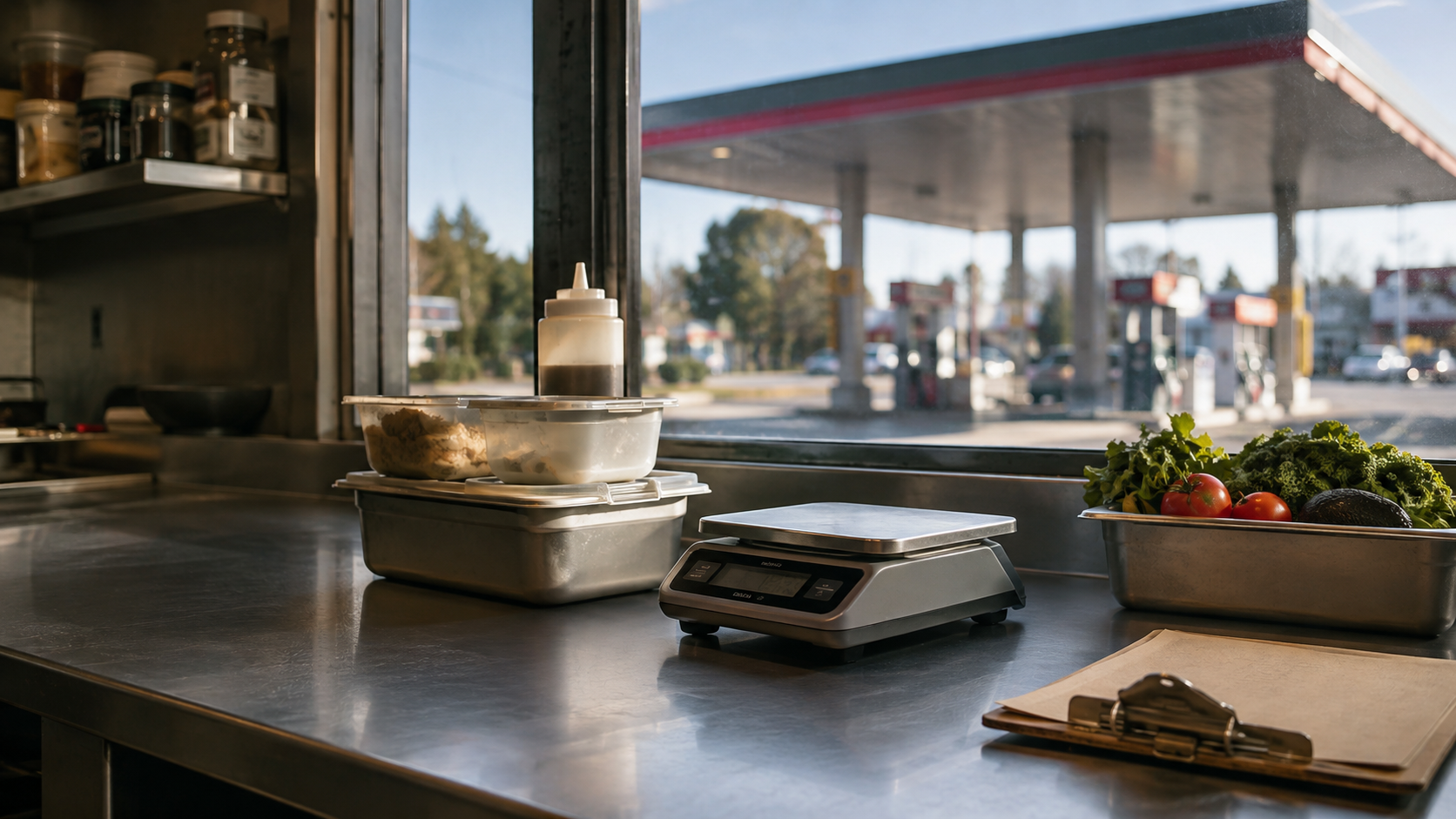
Editorial illustration
This episode examines fuel release detection: make the inspection record as dependable as the sensor and food waste measurement: find the loss before expanding the kitchen. It distinguishes documented requirements or guidance from proposed operating reviews.
Episode scope
US underground-tank operators need a retrievable trail of monitoring, maintenance and escalation. Equipment presence alone does not establish compliance.
A practical food-waste baseline connects discarded product with production and sales. It can guide a targeted trial without borrowing another operator’s savings claim.
The operating recommendations are editorial analysis. They do not establish a measured return, certify a particular installation or provide a universal performance benchmark. Publication and jurisdiction limits are explained in the spoken discussion.
Exact references
- Release Detection for Underground Storage Tanks (USTs) - Introduction | US EPA
- Frequent Questions About Underground Storage Tanks | US EPA
- Hospitality and Food Service Sector | WRAP - The Waste and Resources Action Programme
- Hospitality and food service | WRAP - The Waste and Resources Action Programme
Host
Welcome to Forecourt News. Today we are looking at two different kinds of operating evidence: fuel release-detection records and food-waste measurement. They are not interchangeable controls. One concerns environmental and regulatory responsibilities; the other helps assess kitchen production. The shared management question is whether a recorded status can be traced to the observation behind it.
Co-Host
For regulated underground tanks in the United States, EPA explains that owners and operators need appropriate release detection and records about its performance and upkeep. Its examples cover monitoring, tests and maintenance. The agency also makes clear that its frequently asked questions do not replace the written regulations. The actual system and implementing authority matter.
Host
Our suggested starting point is an equipment register connected to the approved monitoring method and record requirements. Give the relevant assets stable identifiers. For each activity, show when it was due, when it happened, the result and the action still required. Missing evidence should remain visible rather than being silently treated as a pass.
Co-Host
Then test retrieval. Can another responsible person locate a monitoring record without relying on the regular administrator’s memory? Can they distinguish a service invoice from a test result? We recommend keeping corrections traceable and naming the person responsible for unresolved actions. Those are process recommendations, not a certificate of regulatory compliance.
Host
Keep stock reconciliation separate from release detection. A favourable stock comparison cannot replace a required detection record, and an inventory difference is not on its own proof of a physical release. Suspected problems must follow approved safety, investigation and reporting procedures. This episode gives no instruction to bypass equipment or continue operating a suspect installation.
Co-Host
For the kitchen, WRAP’s hospitality guidance provides a framework for measuring food surplus and waste. Its linked measurement guide is dated August twenty twenty. We should not borrow an older sector figure and call it a current market total. The value for this review is the measurement approach and the separate tools available through Guardians of Grub.
Host
Our recommendation is to define the scope before recording waste. Choose the relevant kitchen, products, periods and streams. Keep actual measurements separate from estimates. Record missing observations as missing. Otherwise, a quieter reporting week can look like an improvement even though nobody knows how much product was discarded.
Co-Host
Read waste alongside production and sales. Low discarded volume can coexist with repeated stockouts. A promotion can change both sales and unsold product. We would separate preparation errors, storage problems and overproduction so the trial addresses an identifiable cause. These are proposed categories to adapt to the operation, not a claim about the mix in every kitchen.
Host
A useful trial changes a manageable part of production and records the result. Keep food-safety controls intact. Waste reduction must not become a reason to extend unsafe holding times. Measure the staff effort required by the new process, and include training, software or equipment costs in the financial comparison.
Co-Host
Be careful about valuing the saving. The menu price of an unsold item is not automatically an avoided cost. It assumes a sale that may not have occurred. We recommend using a clearly defined cost basis and avoiding double counting the same change as both extra sales and reduced purchasing.
Host
Across both areas, ask what evidence closes an action. A green status, supplier visit or lower number is a starting point for inquiry. Preserve the observations, the interpretation and the person accountable for the next step. Keep the environmental escalation distinct from the commercial waste review even if they appear in one management report.
Co-Host
For the next review, retrieve one fuel-monitoring record and examine one kitchen production period. Identify what is supported, what is missing and what should change. The linked EPA and WRAP materials explain the source scope. No universal savings percentage is promised. Thank you for listening to Forecourt News.