Safer Late-Night Stores: Make Staff Protection an Operating Routine
NIOSH guidance puts visibility, cash controls, clear exits and staff training at the centre of violence prevention. Technology needs a workable response behind it.
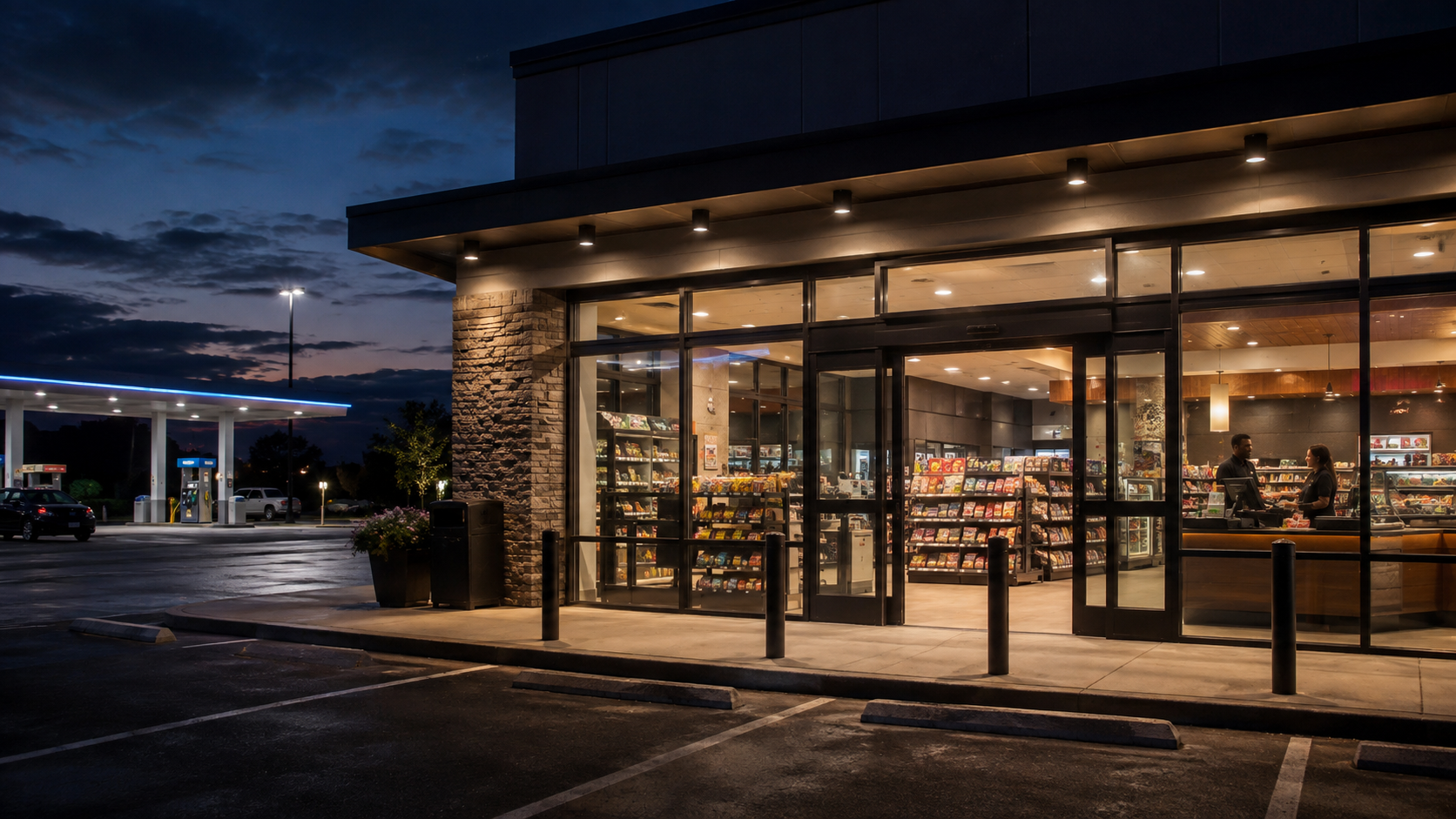
Editorial illustration
A store-safety project should start with the employee who needs help. Cameras, alarms and cash controls have an operating purpose only when people understand the response and the site supports it. For a late-night convenience or fuel retailer, staff protection deserves a routine management process alongside trading and merchandising.
What the reference supports
The archived NIOSH feature, last reviewed in April 2023, discusses violence risks at gas stations and convenience stores, including late opening, lone working and cash handling. It recommends measures such as limiting accessible cash, maintaining visibility and clear exits, and training workers to respond safely. These are prevention recommendations, not a guarantee that incidents will be eliminated or a current crime-rate dataset. NIOSH: protecting gas-station and convenience-store workers
This US reference is useful for designing questions to ask. It does not replace local occupational-safety obligations, emergency arrangements or a site-specific assessment. The following is our operational analysis of how to make that assessment usable in everyday work.
Inspect the real trading layout
Review the store during the hours and staffing conditions being assessed. Check whether promotional displays obscure important views or routes. Include delivery periods, closing tasks and situations in which a worker leaves the counter. Ask employees where the written procedure differs from what is possible in practice.
Assign ownership of agreed actions. A damaged alarm, obstructed route or unclear emergency instruction should have a named person responsible for resolution and a means of escalating delay. Avoid treating installation of equipment as closure of the entire safety issue.
Our recommended staff briefing should make the assistance process understandable: how to call for help, where the relevant information is kept and what the approved response requires. Store policy should prioritise people’s safety over recovery of merchandise or cash. Employees should not be expected to improvise a confrontation to meet a loss-prevention target.
Make reporting useful
Offer a practical way to record threats, near misses and incidents. Capture when and where they occurred, what assistance was needed and which follow-up actions remain open. Protect access to sensitive information and avoid collecting unrelated personal details.
A rising report count after a new process may reflect better reporting. Our recommendation is to examine severity, context and reporting coverage before claiming that safety has improved or deteriorated. A camera count or a software dashboard cannot establish that conclusion by itself.
Review controls with the people using them
Use a safe briefing or scenario discussion to check whether staff know the approved response. Do not stage threatening surprise exercises. Include new starters and colleagues working outside ordinary office hours. Record unresolved questions and arrange support from the appropriate safety professionals.
Review security spending through the control it is intended to strengthen and the evidence that the control works. Financial loss is only part of the review; harm, wellbeing and access to support must remain visible. No percentage reduction in violence is promised here. The intended result is a clear, maintained process that employees can understand and use.