MFG Partners with Lavazza Professional for 600+ UK Forecourt Coffee Upgrades
Motor Fuel Group is rolling out more than 600 Lavazza Coffee to Go machines across its UK network by spring 2027, introducing the new Coffee Essence hardware platform with customized options and telemetry.
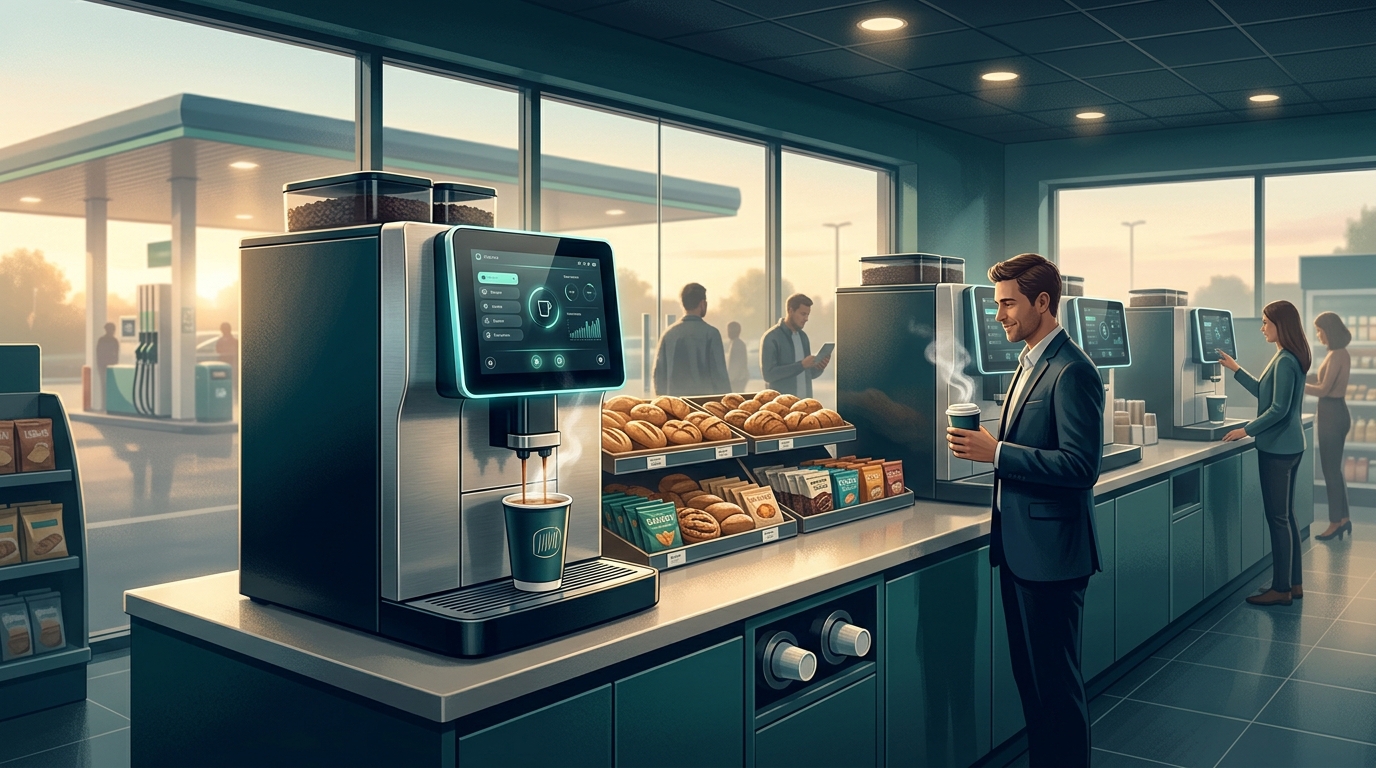
Editorial illustration
Network Rollout and Scope
In a September 2026 announcement, Lavazza Professional partnered with Motor Fuel Group (MFG) to deploy over 600 Lavazza Coffee to Go machines across MFG’s network in the United Kingdom by spring 2027. Motor Fuel Group Rollout. This deployment represents a significant equipment addition across one of the UK's largest forecourt networks. Current figures indicate that MFG serves approximately 25 million cups of coffee annually across its combined service station and convenience store footprint.
The agreement expands the deployment of Lavazza On the Move, which is the supplier's automated coffee-to-go solution. Under this commercial arrangement, MFG is designated as the initial operator in the United Kingdom to install Lavazza Professional’s new Coffee Essence hardware platform.
Equipment Features and Beverage Customization
The Coffee Essence machine introduces expanded drink selection capabilities compared to standard automated forecourt dispensers. The equipment allows consumers to select from multiple coffee blends, including decaffeinated options. In addition, customers can customize their beverages using additions such as flavored syrups and extra espresso shots. Beyond traditional coffee, the dispenser menu incorporates alternative beverages including matcha to address shifting customer preferences.
Commenting on the commercial relationship, William Bannister, Chief Executive Officer of Motor Fuel Group, stated that the brand delivers "greater choice along with great value" for forecourt customers.
Operational Data and Analytics
According to supplier specifications reported in the agreement, the Coffee Essence platform incorporates built-in monitoring technology. This capability tracks individual user interactions and beverage consumption patterns. Lavazza Professional positions this feature as a tool to facilitate ongoing operational adjustments and refine customer experience through telemetry and usage insights.
Strategic Context for Forecourt Operators
Forecourt retailers managing high-volume coffee operations typically distinguish between existing baseline sales volume and incremental network upgrades. In this deployment, MFG’s network baseline of approximately 25 million annual coffee sales serves as the operational foundation into which the 600-plus new machines are being integrated.
For independent operators and forecourt managers evaluating hot beverage hardware across UK retail sites, the deployment highlights several clear operational considerations:
- Menu Diversity: Offering non-coffee alternatives such as matcha alongside traditional espresso options caters to broader demographics without increasing counter labor footprint.
- Customization Potential: Enabling customer-led customization through automated additions like extra shots and syrups allows operators to increase average transaction values through premium add-ons.
- Telemetry Integration: Deploying connected machines capable of logging consumption patterns provides store management with concrete data on peak traffic, flavor popularity, and ingredient depletion.
Analysis and Operator Hypotheses
Note: The following section represents independent analytical evaluation separate from sourced factual statements.
While hardware suppliers assert that telemetry and expanded customisation improve operational efficiency and customer experience, forecourt operators should view these claims as operational hypotheses requiring controlled empirical verification rather than guaranteed outcomes.
Hypothesis 1: Labor Reduction and Operational Efficiency
- Supplier Claim Context: Automated telemetry and user monitoring improve operational workflows.
- Proposed Test: Operators should measure labor hours spent on machine maintenance, cleaning, and refilling over a 90-day baseline before implementation versus a 90-day period post-installation. An operator can evaluate whether automated error alerts and consumption tracking lead to measurable reductions in staff intervention time or out-of-stock incidents.
Hypothesis 2: Profit Margin and Transaction Value Improvement
- Supplier Claim Context: Offering expanded syrup options, extra espresso shots, and specialty drinks like matcha enhances value and choice.
- Proposed Test: Retailers should compare basket size, gross margin per unit, and total hot beverage gross profit between sites with standard coffee machines and sites equipped with customizable automated units. A 180-day A/B test across comparable traffic locations will clarify whether premium add-on sales offset higher initial equipment and ingredient costs.
Hypothesis 3: Customer Satisfaction and Retention
- Supplier Claim Context: Interactive customization and broader menu offerings elevate customer satisfaction.
- Proposed Test: Perform quarterly customer intercept surveys and track repeat loyalty app transactions at newly upgraded sites versus control locations to establish whether menu breadth directly correlates with higher repeat visit frequency.
By systematically distinguishing supplier statements and equipment specifications from verified on-site performance metrics, forecourt operators can effectively evaluate automated coffee platform upgrades within their own retail networks.