Forecourt Foodservice Innovation: 7-Eleven Expands Customization as Pilot Standardizes QSR Ordering
7-Eleven and Pilot announced different foodservice changes; their business effects need measurement.
Editorial illustration
Two documented changes in foodservice
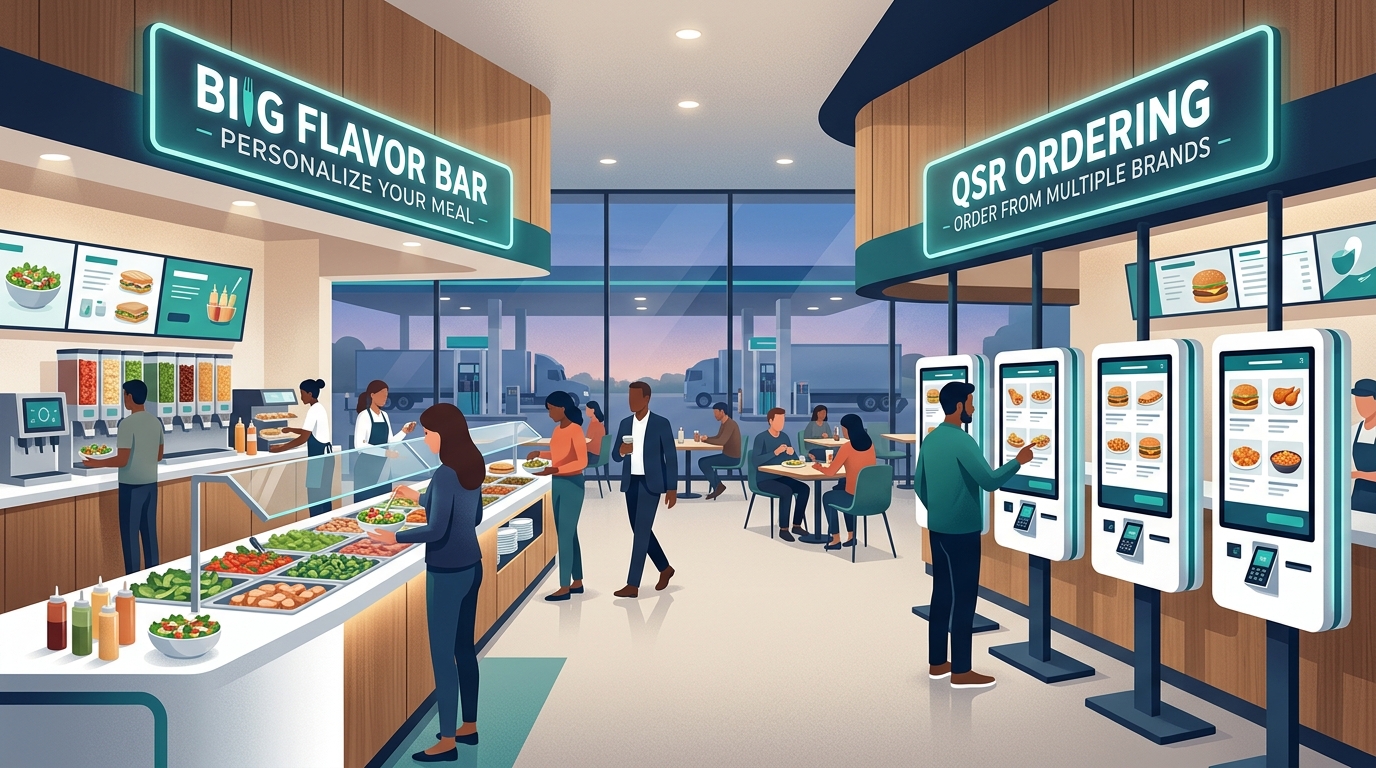
NACS reports that 7-Eleven introduced its BiG Flavor Bar, with toppings and seven sauces at participating 7-Eleven, Speedway and Stripes stores. The participation qualifier matters: the report is not confirmation that every branded location has the offer. NACS report on the flavour bar
NACS also reports that Pilot completed its ordering-platform rollout at Wendy’s and Arby’s sites and had work underway at Subway locations. The report identifies 156 self-order kiosks across 78 Wendy’s locations and describes access to brand ordering and loyalty functions where available. These are reported deployment details and company objectives, not independently measured service or labour results. NACS report on Pilot ordering
Operator analysis: give customisation an operating owner
A broader condiment offer may appeal to some customers. Its effect on demand and workload must be measured. Replenishment, cleaning, customer assistance and discarded product remain operating tasks. It is inappropriate to infer that self-service additions leave kitchen labour unchanged simply because customers assemble part of the meal.
Our recommendation is to define the offer, the applicable food-safety controls and the person responsible for maintaining it during each shift. Observe the complete order, including queues and customer help. Test the smallest manageable range before expanding the station.
For the commercial review, compare the contribution of affected products after ingredient, packaging, waste and staff costs. If a promotional launch changes prices or demand, keep those conditions with the results. Avoid assigning all movement in food sales to one piece of equipment.
Operator analysis: test the partner ordering journey
Using a restaurant partner’s preferred platform may support access to the partner’s functions, but the exact site configuration and availability must be confirmed. Test menu synchronisation, modifiers, unavailable items, payment, order routing, collection and refunds. A recognised interface should not be assumed to resolve every forecourt operating exception.
Specify who investigates an order that crosses brand, restaurant, delivery and payment systems. Agree how the site trades if the new component fails. Keep software versions and the accepted configuration with the supplier’s support commitment.
Decide against outcomes, not the announcement
Our proposed scorecard includes order completion, service time, remakes, support requests and staff workload. Compare like trading periods and account for changes in menu and traffic. These are measures for a local trial, not performance figures reported by NACS.
Neither announcement establishes that all operators will reduce labour, increase satisfaction or maximise consumer reach by adopting the same format. Expansion should depend on the customer result and contribution the operator can demonstrate, with the costs of continued support included.
Editorial clarification — 8 September 2026
Preserved the reported rollouts and participation limits; replaced unsubstantiated labour savings, satisfaction improvements and universal technology superiority with explicit test proposals.