Food Waste Measurement: Find the Loss Before Expanding the Kitchen
A practical food-waste baseline connects discarded product with production and sales. It can guide a targeted trial without borrowing another operator’s savings claim.
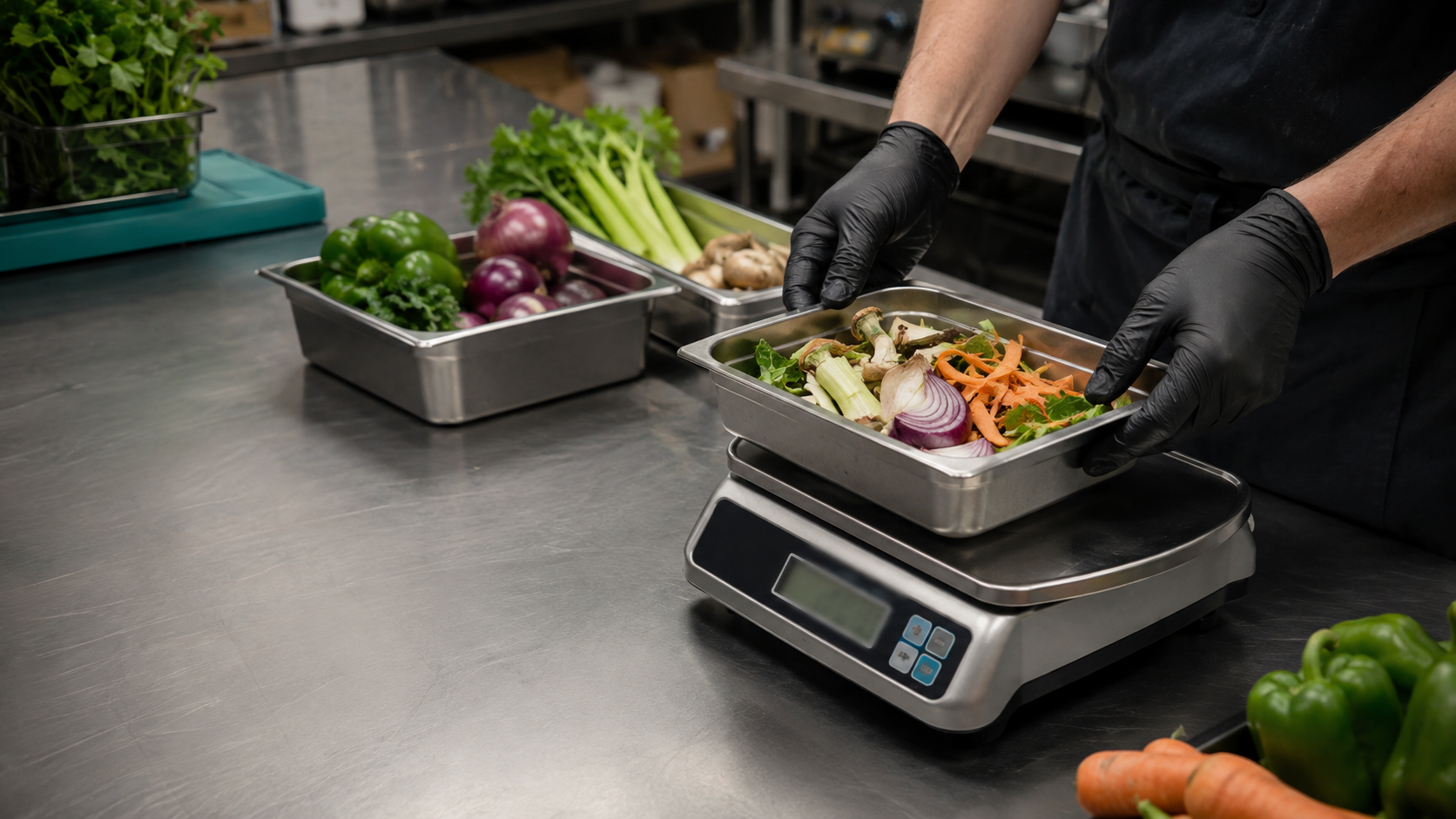
Editorial illustration
A kitchen can sell more food while discarding more of it. Looking only at sales makes it difficult to distinguish successful growth from production that has become less controlled. A forecourt QSR or food-to-go operation needs a baseline that connects purchasing, preparation, sales and waste before deciding that more equipment is the next investment.
Start with a measurement framework
WRAP’s hospitality and foodservice guidance describes common measurement and reporting guidelines aligned with the Food Loss and Waste Accounting and Reporting Standard. Its stated purpose includes understanding how much waste occurs, where it occurs and why. The linked guide is dated August 2020; figures on that page must not be presented as a fresh 2026 market estimate. WRAP hospitality and foodservice measurement guide
WRAP also provides the Guardians of Grub campaign with tools, guidance and skills resources. That gives operators a starting point for improvement work, not a guaranteed financial return from implementing a particular POS or forecasting product. WRAP hospitality and foodservice resources
Operator analysis: make the baseline repeatable
Our recommendation is to define the scope of the measurement before collecting data. Decide which kitchen, products, trading periods and waste streams are included, and keep those boundaries consistent. Record the measurement method and distinguish actual weights from estimates.
Connect waste observations to practical causes: preparation error, excess production, storage problems or unsold prepared product. Keep reasons simple enough for staff to use consistently. Record incomplete observations as missing, not as zero waste. Otherwise, an apparent improvement may simply mean fewer entries.
Review production and sales beside the waste record. A low discard total may conceal a long period with empty shelves. Conversely, a busy promotion can increase both sales and discarded units. The purpose is to understand the trading result, not to select the one number that looks favourable.
Test one change and count its costs
For a pilot, change a manageable part of the process, such as a production batch or replenishment decision for one product family. Keep food-safety procedures and required controls in place. Waste targets are not a reason to extend unsafe holding times or sell products outside approved conditions.
Our suggested scorecard includes waste quantity, waste per relevant production or sales unit, stockouts, staff recording effort and contribution after costs. Keep ingredient costs separate from retail selling prices. Valuing every discarded item at its menu price can overstate an avoided cost; it assumes a sale that may never have existed.
Build the next investment from the findings
Include any equipment, software, training and extra work in the comparison. Do not count the same improvement twice as both avoided food cost and additional sales. If customer demand, opening hours or promotions changed during the trial, explain that limitation.
Expand the intervention only when the records support it and the process remains practical for the team. Better measurement can reveal where to investigate, but this article does not claim a universal waste-reduction percentage, margin uplift or payback period for forecourt kitchens.