2D Barcode Readiness: Test the Sale, the Date and the Exception
GS1’s retail transition is a practical integration project. A successful scan must become one correct transaction, with additional product data handled deliberately.
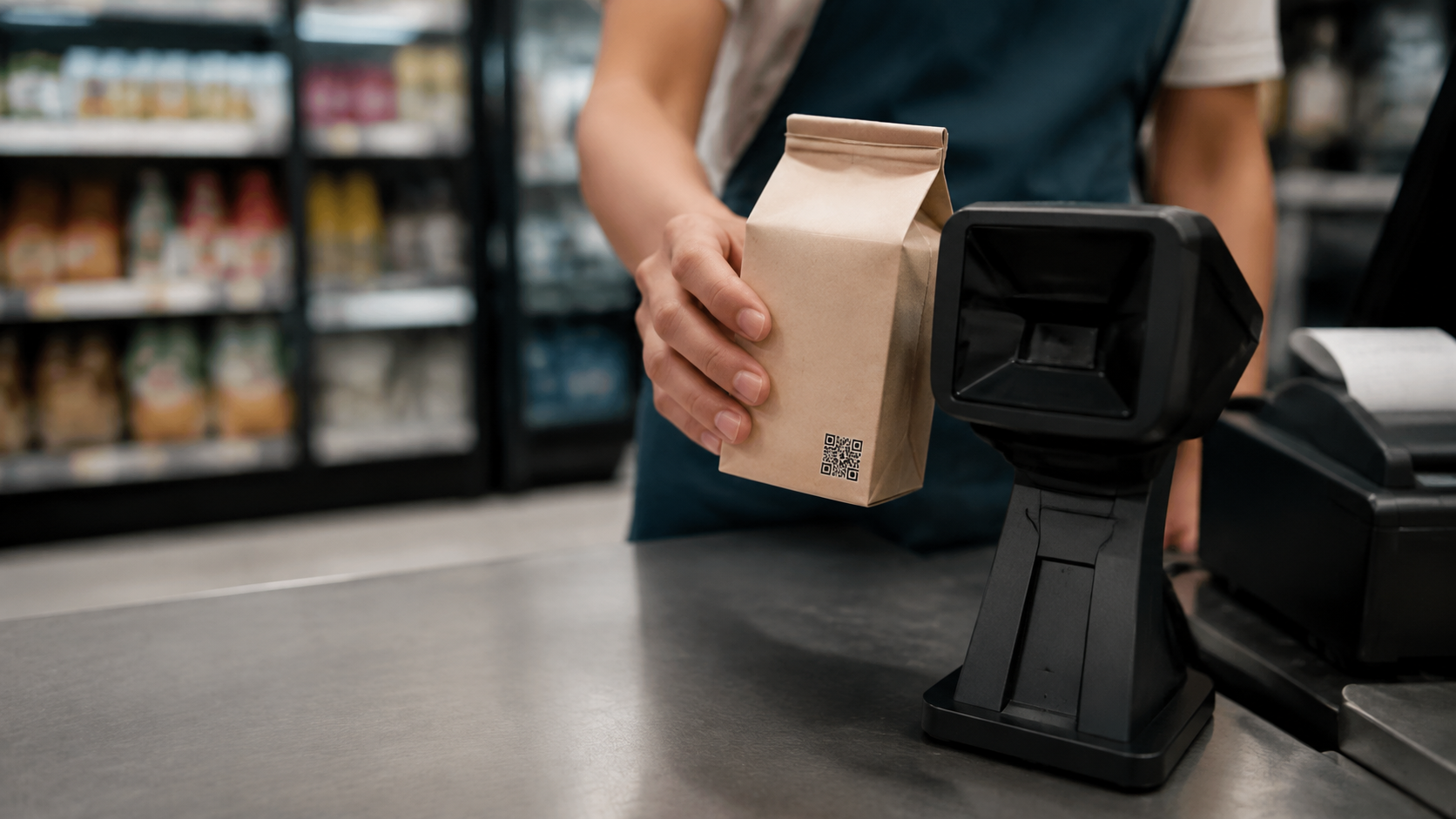
Editorial illustration
A scanner that reads a square symbol has passed only the first test. For a convenience operator, readiness means the right product, price and quantity reach the receipt and the stock record. The commercial question is what additional product information the business can actually use without making checkout harder.
What the standard establishes
GS1’s implementation guideline describes a voluntary transition. Its initial ambition is for retail checkouts to process product identifiers from both existing linear and supported 2D barcodes by the end of 2027. It also describes optional data such as expiry dates and batch identifiers. These are capabilities of the encoding and implementation, not proof that every package already contains those details. GS1 retail implementation guideline
GS1’s accompanying explanation presents 2027 as a collective adoption goal that allows system upgrades and phased rollout. It does not announce a law making every existing barcode invalid on that date. GS1 explanation of the 2027 goal
Operator analysis: define acceptance at the transaction level
Start with an assortment supplied by the brands and distributors the store actually uses. Include packages carrying both symbols, variable packaging quality and products whose dates are printed in ordinary text but absent from the encoded data. Record the scanner, firmware, POS release and product-master version used in the test.
Our suggested acceptance condition is one intended item resulting in one correctly priced receipt line and one appropriate stock movement. Test repeated scanning, refunds, quantity changes and a damaged symbol. An operator should know what happens when the new data cannot be decoded, rather than finding out during a busy shift.
Keep identifier capture separate from a proposed expiry-control feature. If the POS receives a date, specify how it is interpreted, how missing values behave and who can resolve an exception. Do not promise automatic expiry blocking where the supplier has not demonstrated that function. A consumer-information web link is also different from locally available transaction data.
Pilot scorecard
For a controlled trial, we recommend recording successful first scans, duplicated receipt lines, manual product lookups, rejected transactions and staff assistance time. Separate failures caused by labels from failures caused by the scanner, parser or product master. These are proposed measurements, not industry performance benchmarks.
Compare the trial with ordinary trading and retain the test baskets. An improvement in scanning should not conceal slower exception handling. Train staff on the actual fallback, including how to complete a legitimate sale when optional data is unavailable and store policy permits it.
The investment decision
Ask the supplier to demonstrate support using your sample products before approving hardware replacement across the estate. Prioritise the specific gap revealed by testing: imaging capability, software parsing, master data or an operating procedure. Budget separately for richer-data features and for basic product identification.
The useful outcome is a documented capability the store can support. Waste reduction or labour savings may be reasons to investigate additional features, but neither is established merely by installing a 2D scanner.